If Your Roof
Is a Low-Slope Retail or Office Deck
Flat steel or concrete decks under a strip center or office take welded TPO over new insulation well.
Start WithTPO Roofing

As a State College TPO roofing contractor, we tear off worn flat roofs and install welded white TPO on retail centers, offices, and research buildings.
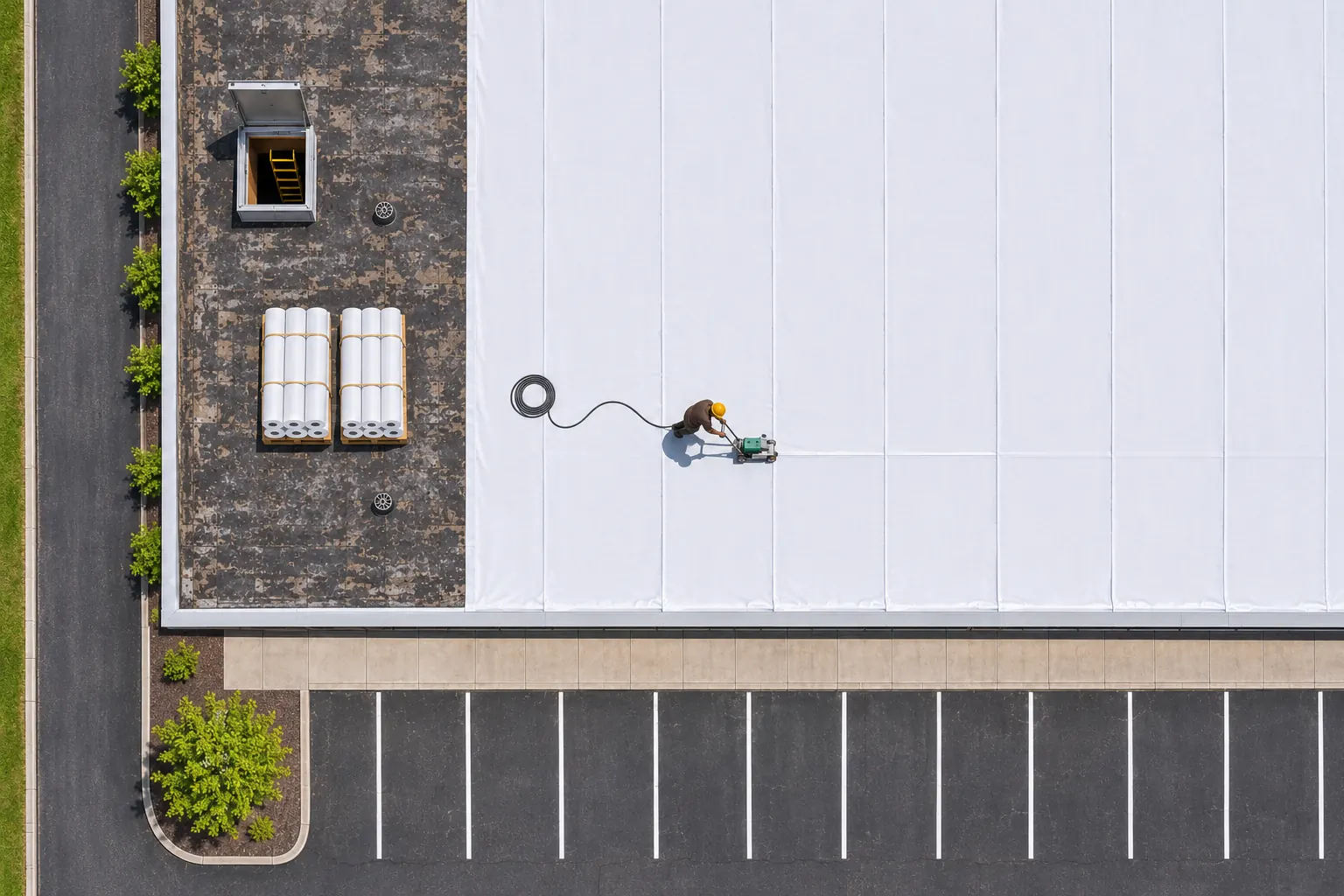
State College TPO roofing suits most low-slope commercial decks. These four roofs show where it starts and where something else comes first.
Flat steel or concrete decks under a strip center or office take welded TPO over new insulation well.
Heat-welded flashing wraps each curb and pipe, and walkway pads lead to each unit.
Tapered insulation and lowered drain bowls get built into the new TPO scope.
Panels on a sloped frame do better as standing-seam metal than as membrane.
Older single-ply roofs show trouble indoors first. Match what you see below to the roof detail behind it.
A row of ceiling stains that follows one direction usually tracks a seam running overhead.
Cold welds and dirty laps peel back over time, and a probe along the seam finds the gaps.
Puddles near mechanical rooms often start where a curb flashing corner has split.
Inside and outside corners take the most movement, so their patches crack before the field does.
Leaks that wait for a two-day soaking point to water sitting long enough to find a pinhole.
Sunken drain bowls and crushed insulation leave rings of dirt where water sits after storms.
A drumming sound overhead in storms usually means the membrane has pulled loose from its plates.
Fasteners backing out at the perimeter let wind lift the sheet and stretch the seams nearby.
Upper offices that bake in July can sit under a dark, worn surface or thin, damp insulation.
Cores show whether the board is dry and thick enough to keep, or soaked and ready to come out.
TPO goes on in several build-ups. The deck, the old roof, and the wind exposure decide which one.
Plates and screws hold the sheet in the seam laps, a common choice on steel decks over new polyiso board.
Bonding the sheet to cover board gives a smooth surface where wind uplift or foot traffic is high.
A recover board over one dry old roof works when cores pass and drains and curbs still line up.
Sloped board under the TPO moves water toward drains on decks that sit dead flat.
A welded white roof changes something for each person who depends on the building.
Send a photo or the address. We will probe the seams, check the curbs, and tell you whether it is a repair or a reroof.
Each TPO roof follows this order, section by section.
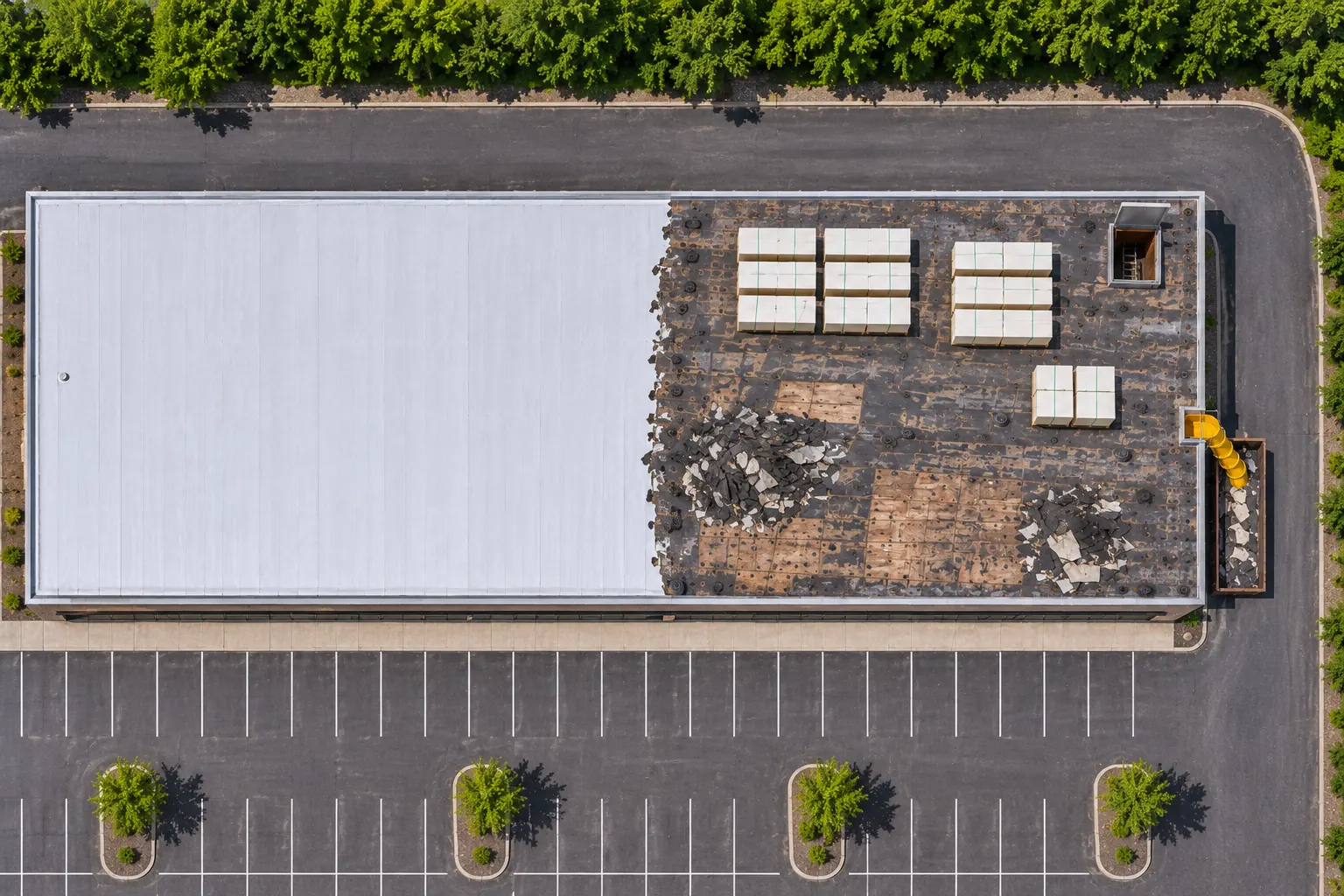
Seams get probed, cores come out at low spots and curbs, and moisture readings map the wet board.
Attachment, board thickness, and taper layout get chosen for the deck, the wind zone, and the drains.
Crews remove only what they can insulate and cover that day, starting at the drains.
Sheets go down over the new board, every seam is hot-air welded, and each weld gets probed before moving on.
Curbs, pipe boots, drains, and edge metal get welded flashing, then a final walk with you.
Some buildings on the same property need a different system.
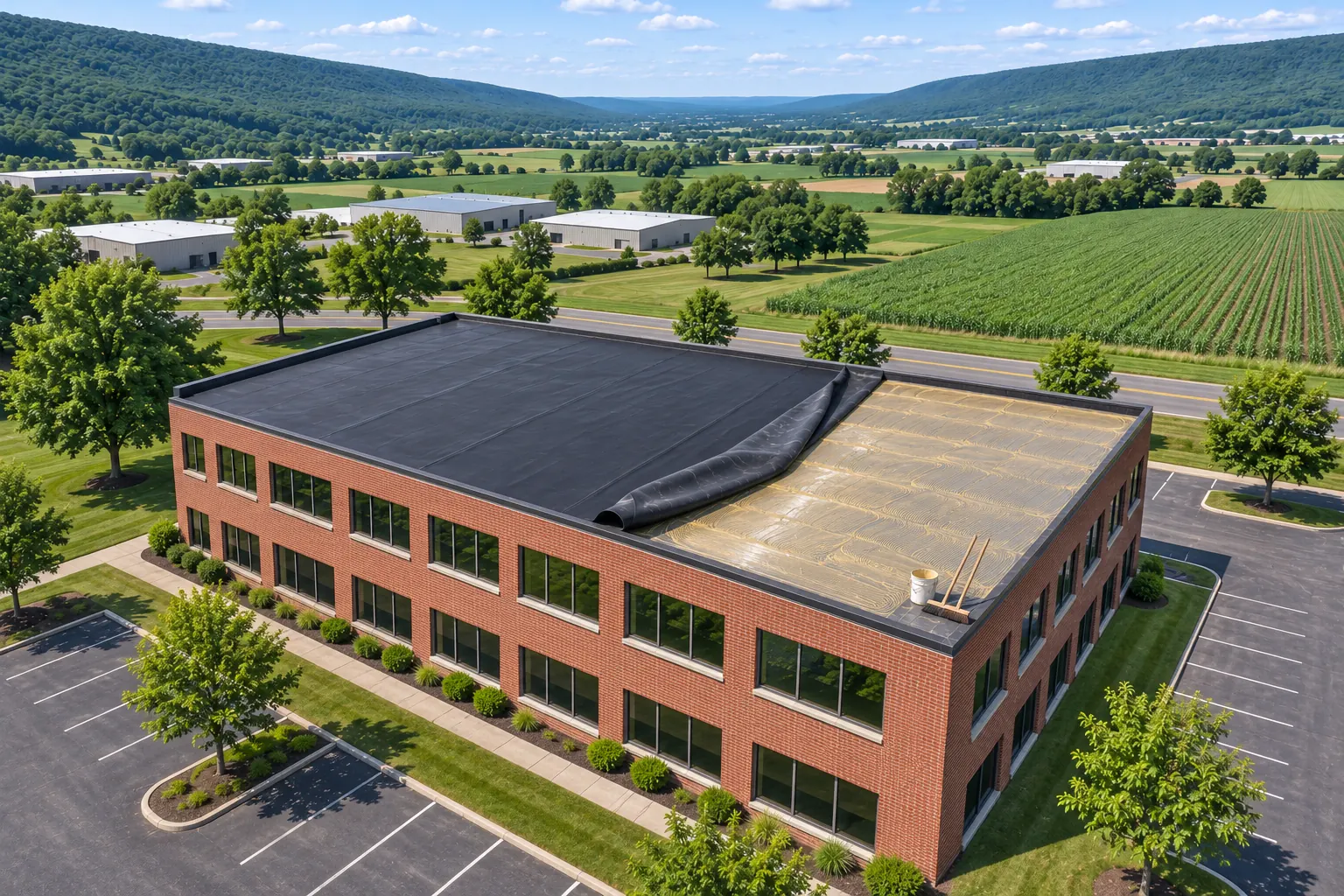
Plain brick office roofs next to a retail center often stay with EPDM, a black sheet with few seams on big fields.
EPDM Roofing details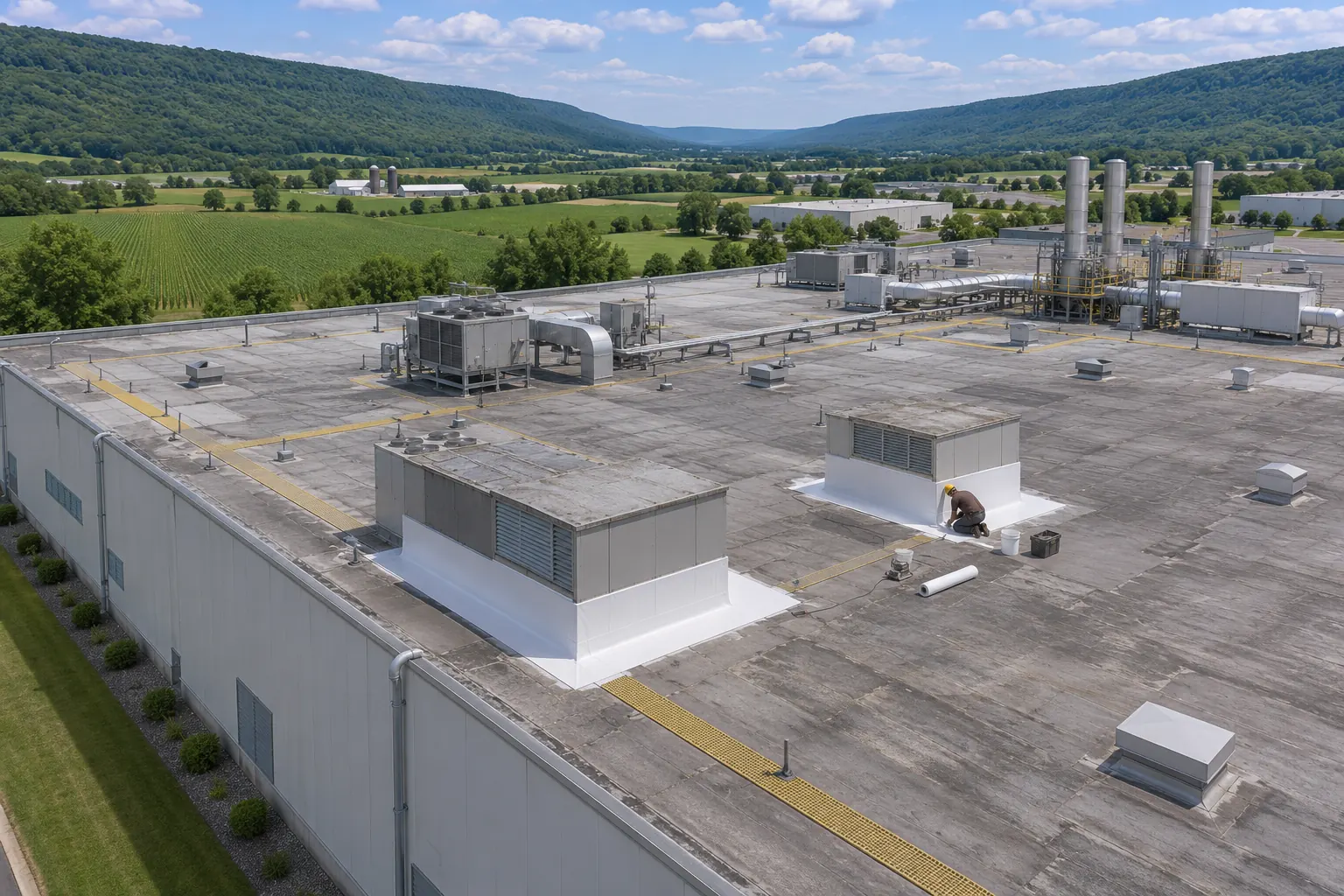
Support buildings with stacks and exhaust beside an office park need an industrial scope planned around operations.
Industrial Roofing details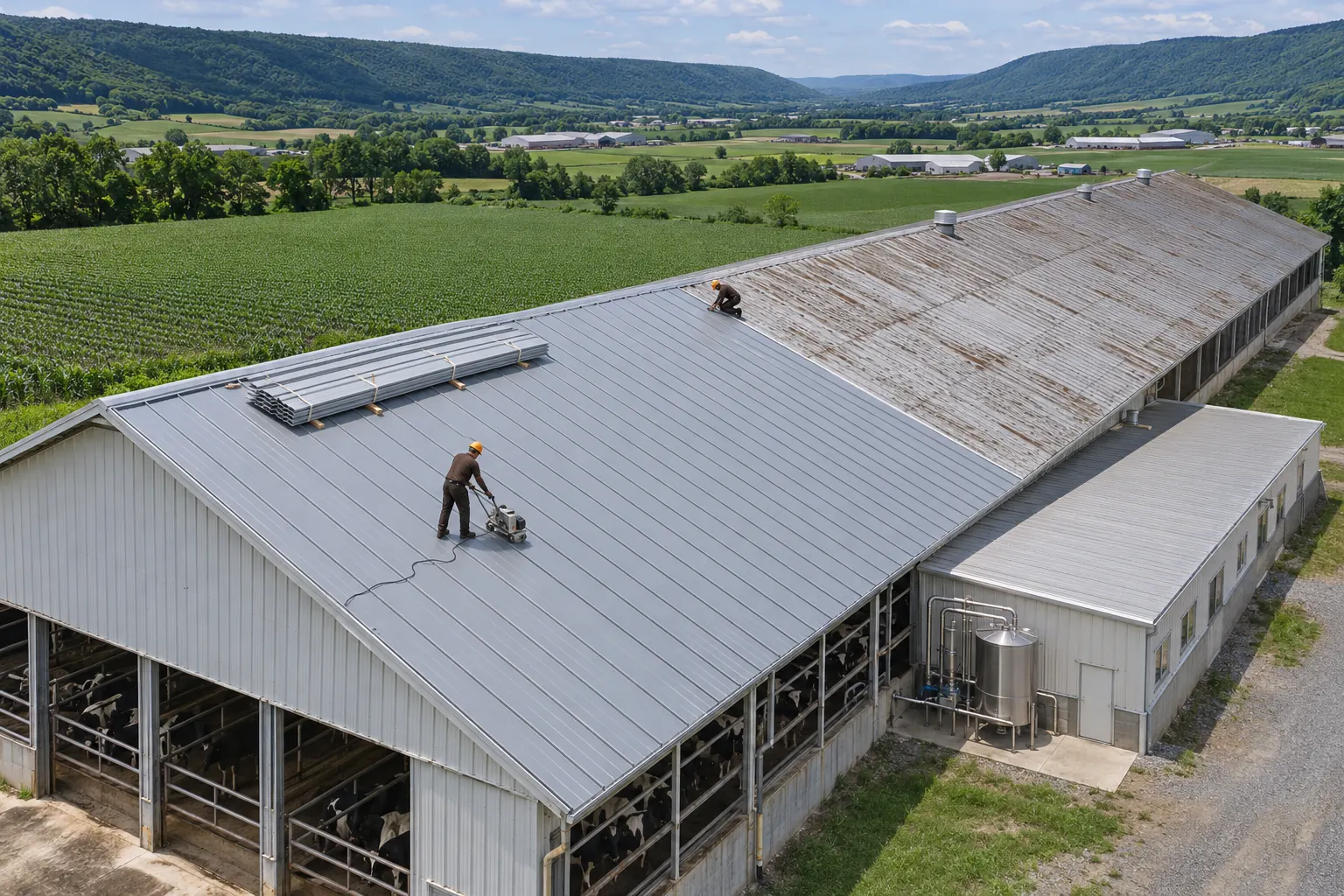
Pitched storage and shop buildings on the same lot take standing-seam panels better than a membrane.
Commercial Metal Roofing detailsTPO is a thermoplastic single-ply membrane, usually white, that gets heat-welded at its seams. On a retail center it sits over insulation and cover board, with welded flashing at curbs and edges. Drainage and equipment connections still need their own plan in the scope.
Price comes from the full scope set at the roof walk. Area, membrane thickness, insulation, tear-off layers, deck repair, edge metal, flashing count, access, staging, and season all count. Dense rooftop equipment adds flashing details and slows the install, so square footage alone misses the real job.
Sometimes. Cores have to show dry insulation and good attachment in the old roof first. Drains, curb heights, and edge details then have to work with the added thickness, or the old roof comes off.
Welding, adhesives, and safe footing set the limits. Frost and moisture on the deck stop a section, while dry, cold days can still allow welding with the right settings. We plan each detail by the product rules rather than one temperature for the whole roof.
Sheet thickness gets picked with the deck, traffic, and expected service visits in mind. Busy roofs with lots of equipment work often get a heavier sheet and more walkway pads. The proposal states the thickness so bids compare evenly.
Yes, in most cases. Tear-off runs in sections, noisy work gets scheduled around opening hours where possible, and entrances stay clear of material lifts. Each night the open section gets sealed.
Snow sitting on a TPO roof is normal in central Pennsylvania winters. Problems come from drains and scuppers that freeze shut and from ice packed against curbs, so the scope covers drain heat where needed, curb heights, and slope toward each outlet.
Call or send the address, and we will probe the seams and core the roof.