Low Slope
TPO Roofing
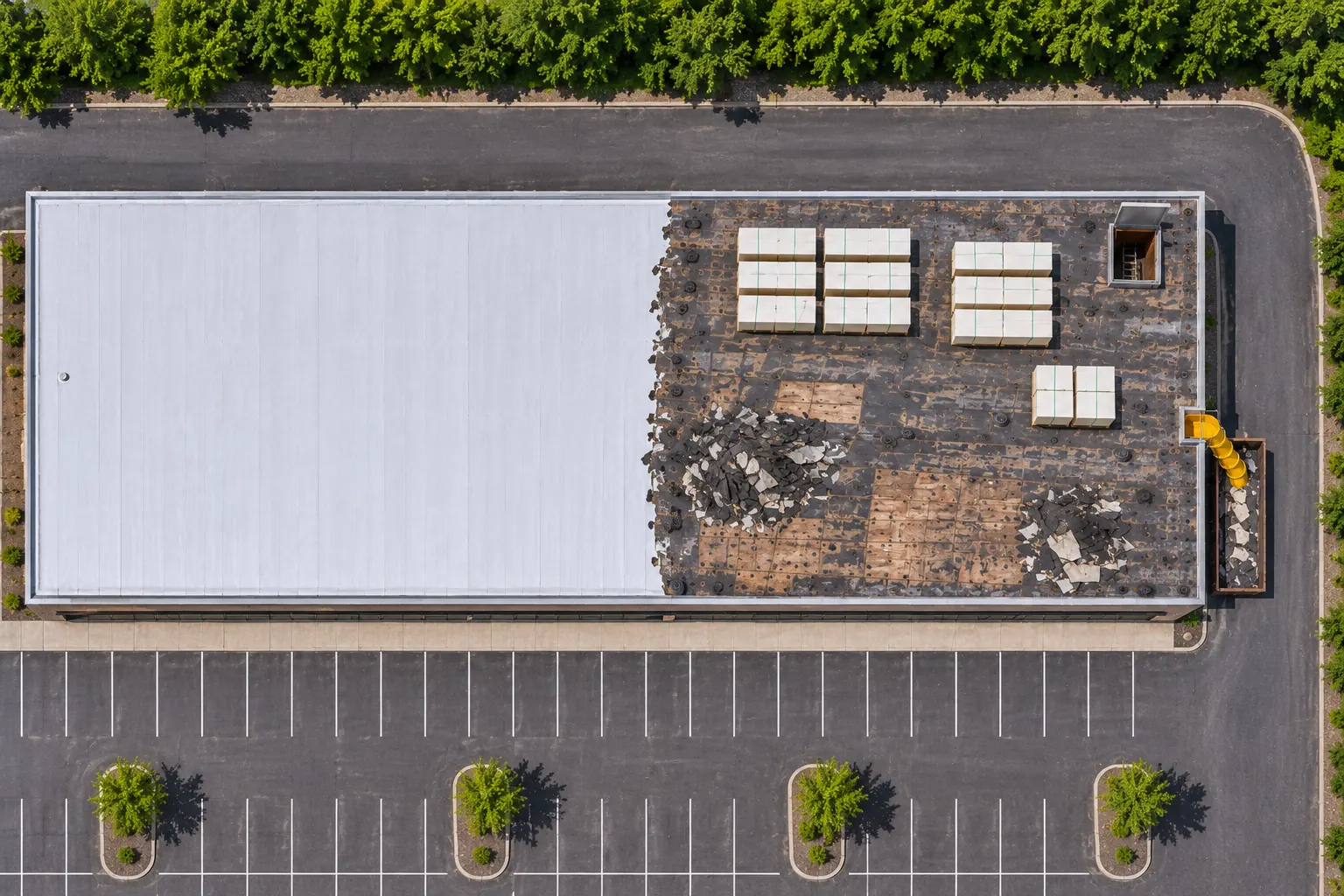
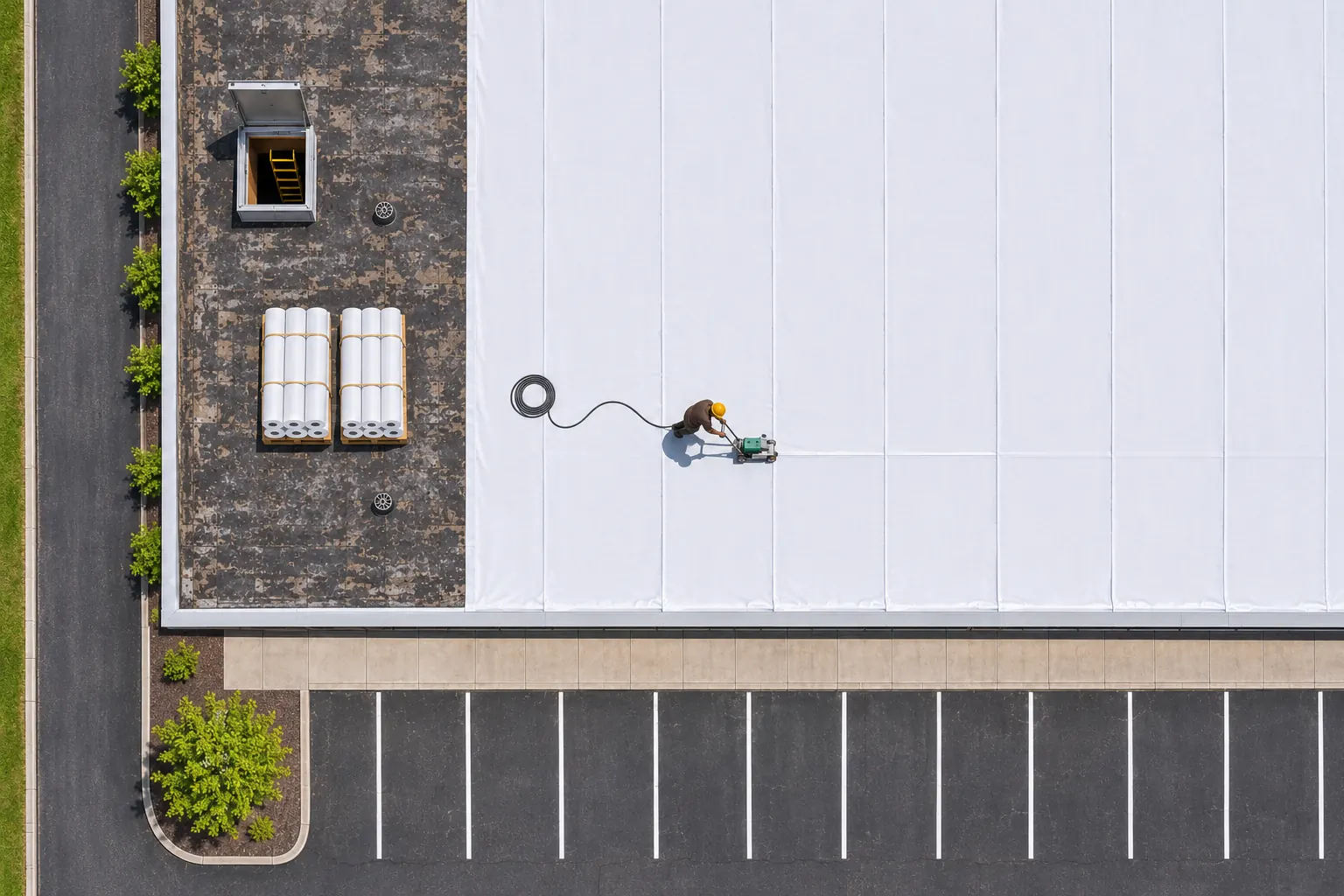
TPO suits flat retail and office roofs that need a white surface, hot-air welded seams, and tight flashing around many penetrations, from rooftop units to conduit and exhaust fans.
TPO Roofing details
Our commercial roofing services in State College cover four roof systems plus full replacement, each matched to the deck and the building below.
Commercial roofing services in State College start with the roof system. Read the fit line for each and follow the link that matches your building.
TPO suits flat retail and office roofs that need a white surface, hot-air welded seams, and tight flashing around many penetrations, from rooftop units to conduit and exhaust fans.
TPO Roofing details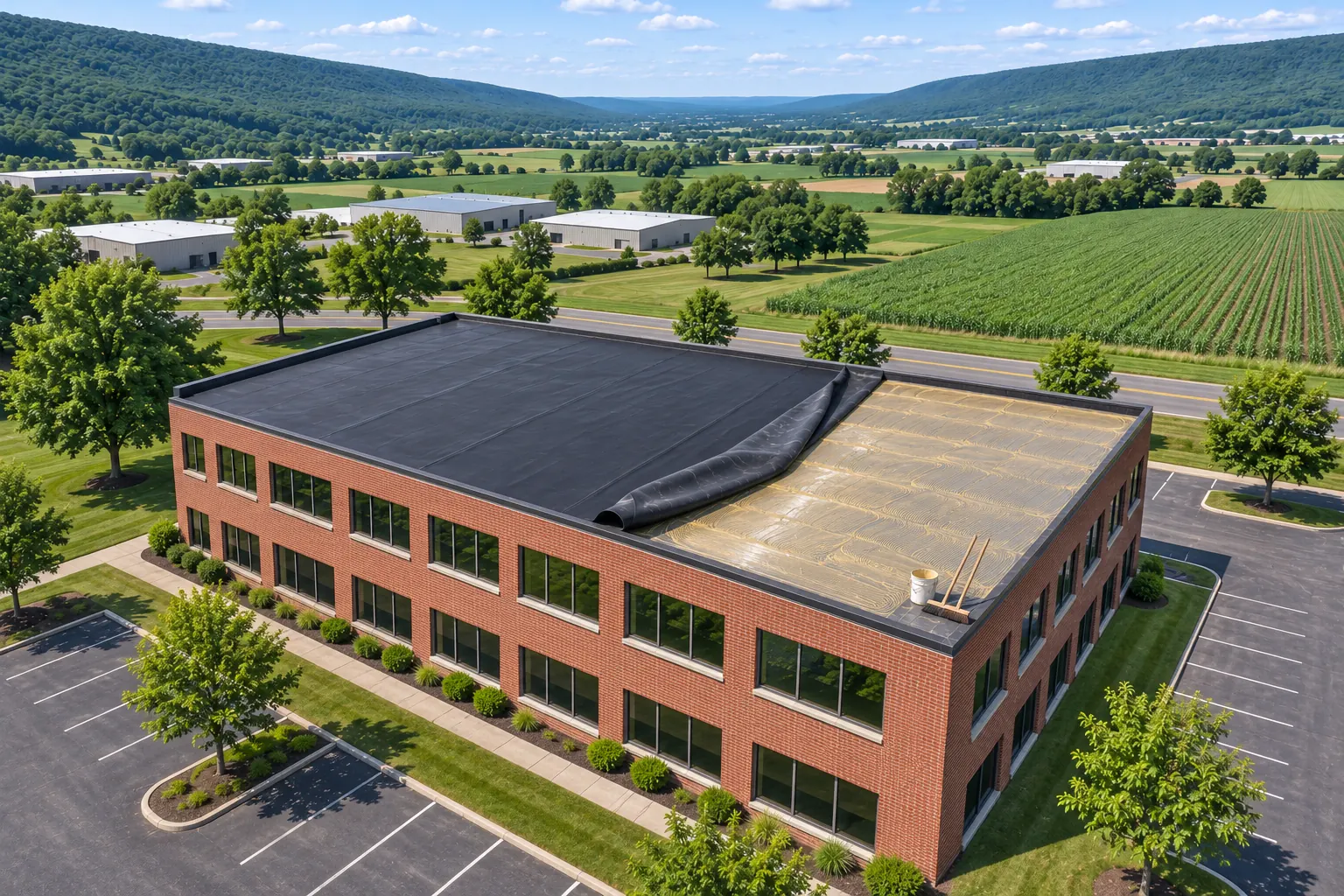
EPDM fits older flat roofs and brick offices where a flexible black sheet and fewer seams make sense on a large field, with new flashing up every parapet wall.
EPDM Roofing details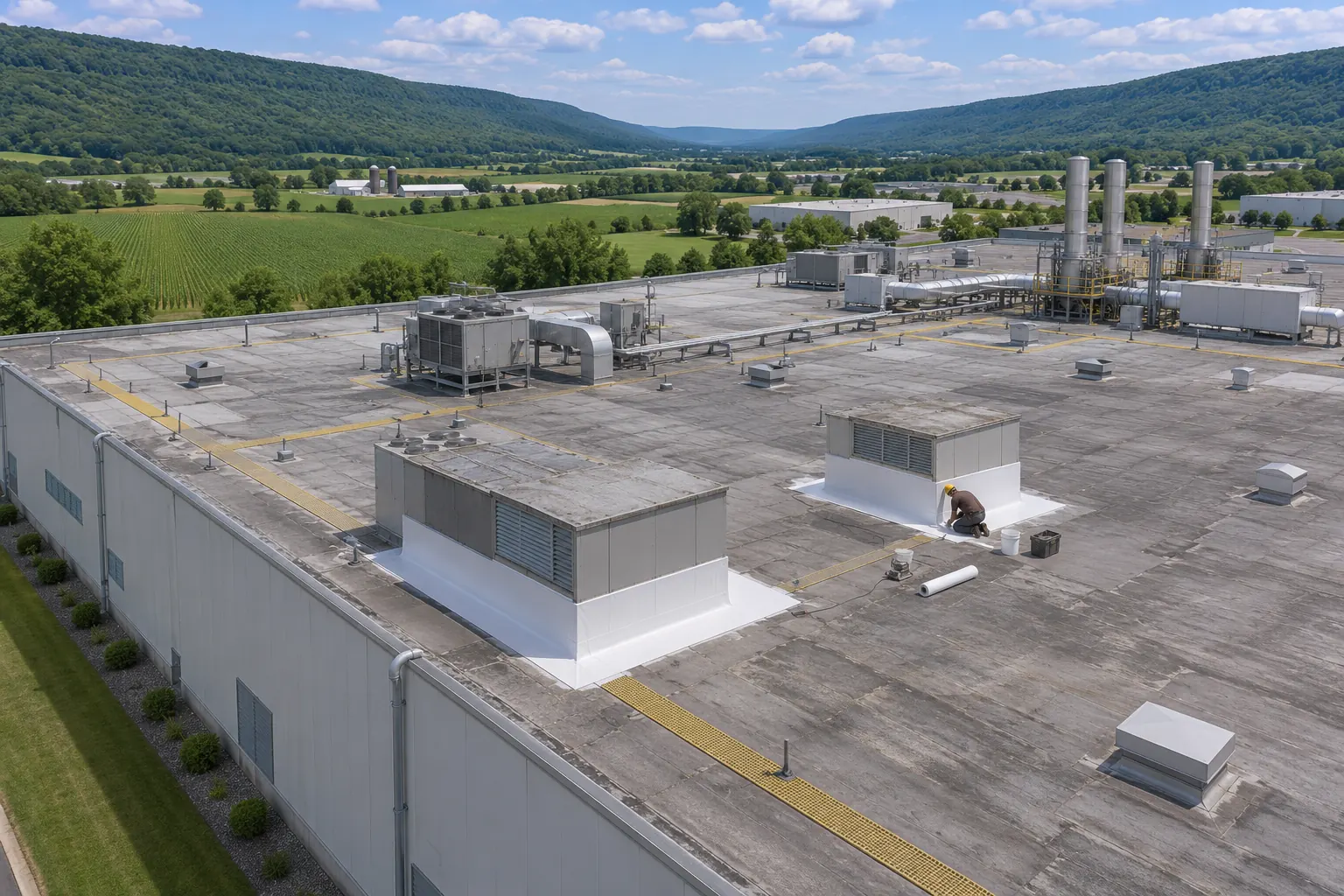
Industrial roof scopes cover plant decks crowded with stacks, exhaust, and ductwork, with work zones set around production and research.
Industrial Roofing details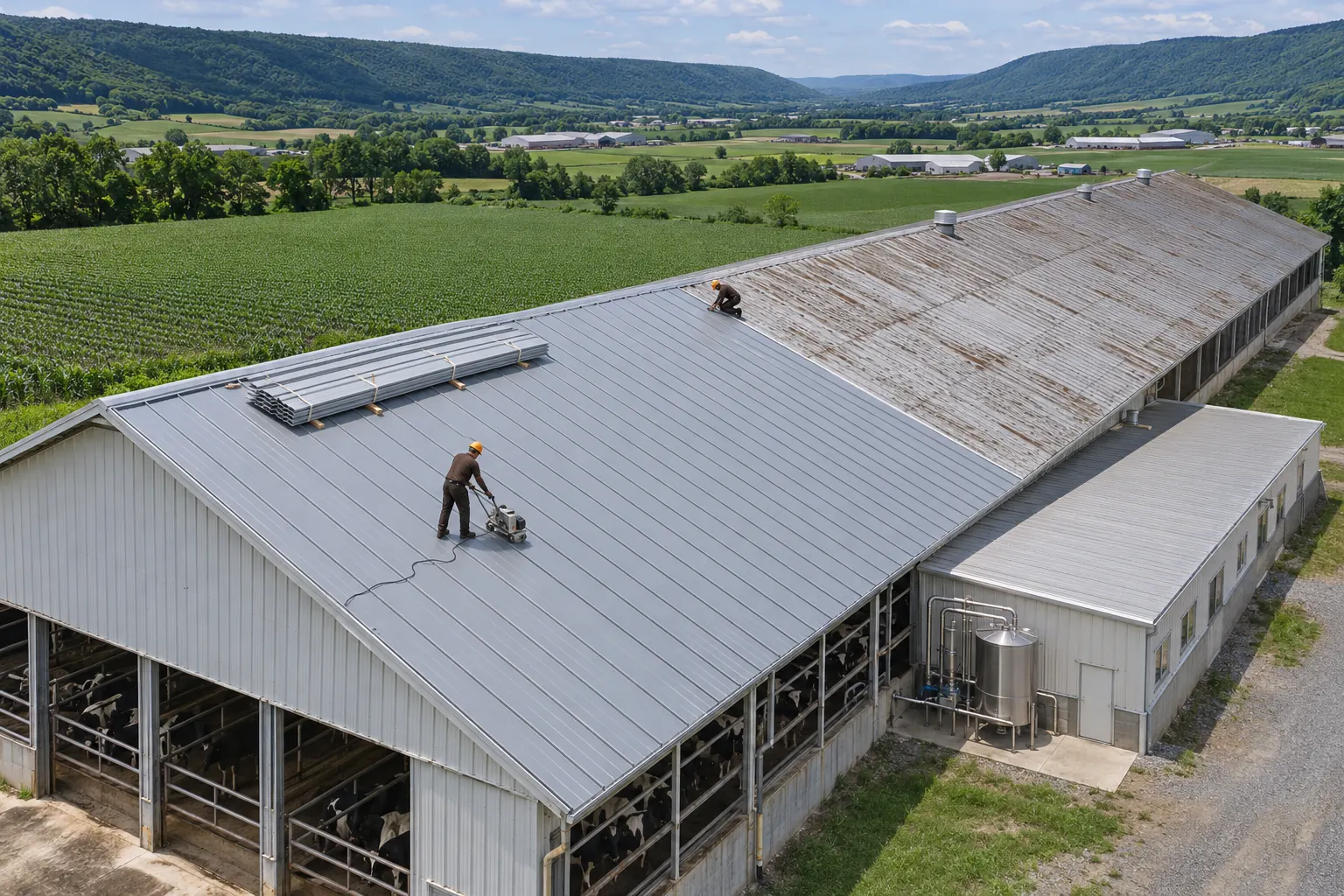
Standing-seam steel replaces rusted exposed-fastener panels on barns, shops, and warehouses, or goes over a flat roof on new framing, with snow guards where people walk below.
Commercial Metal Roofing detailsReplacement makes sense when water has reached the insulation across much of the roof.
We tear off to the deck in sections, repair rotted or rusted deck panels, install new insulation and cover board, and finish each section before the next one opens. The new membrane or panel system gets picked from the deck, slope, and building use.
Recovering over one existing roof is an option only when cores show dry insulation and good attachment, and when drains and curb heights still work after the added thickness.
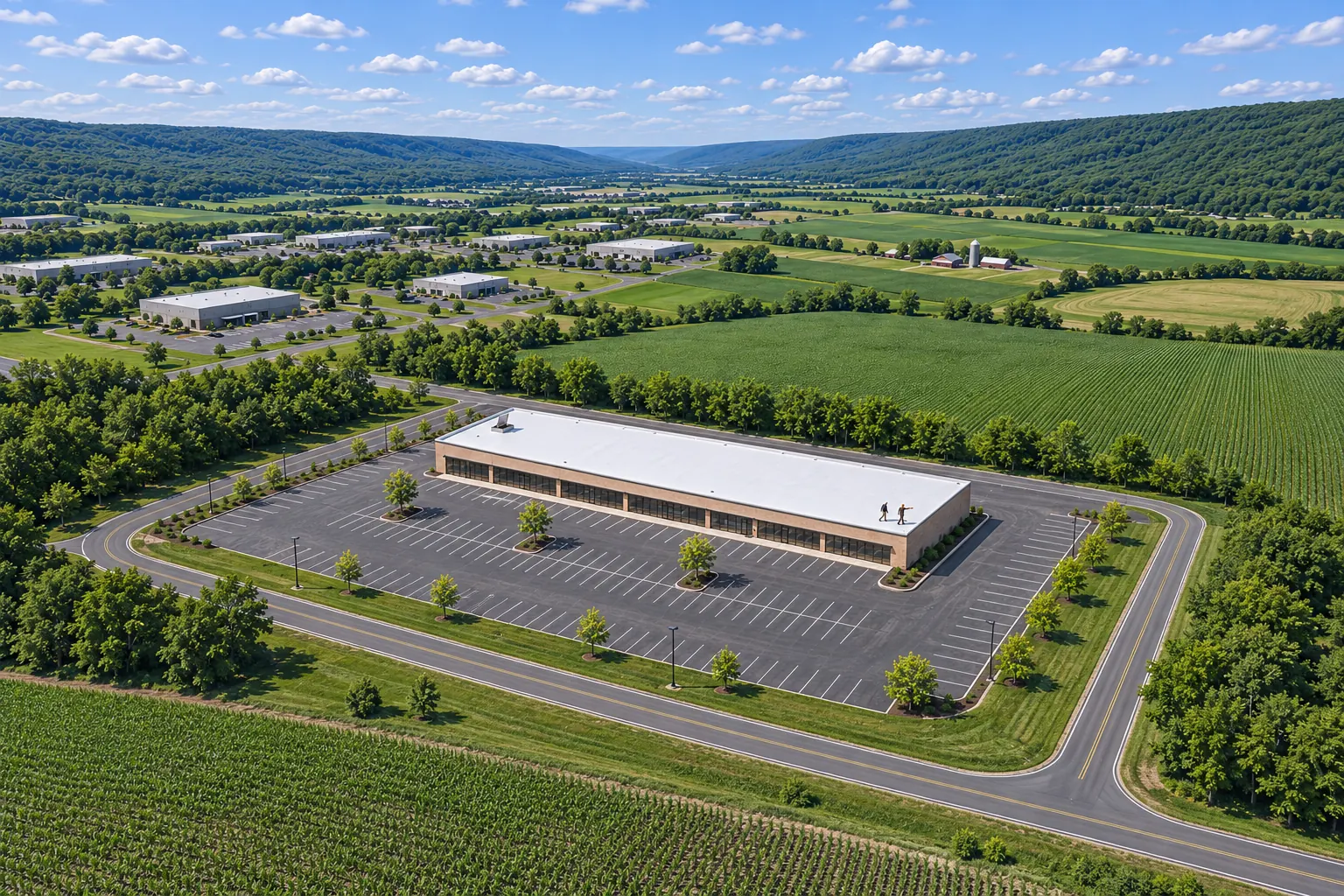
Match the roof you have to the work that usually comes first.
Tapered insulation and reset drains come with the new TPO so water stops sitting at the bowl.
Wide rubber sheets cover big fields with a small number of seams, which suits plain warehouse roofs.
Sections open on a schedule built around the plant, with dust and odor controls near air intakes.
Loose screws and rusted laps on a barn or shop point to new standing-seam panels once the framing checks out.
Soaked board across large areas means the old system comes off before any new membrane goes down.
Spring and summer roof walks leave time for cores, a written scope, and material orders before the first freeze.
TPO, EPDM, industrial, and metal jobs all move through these steps.
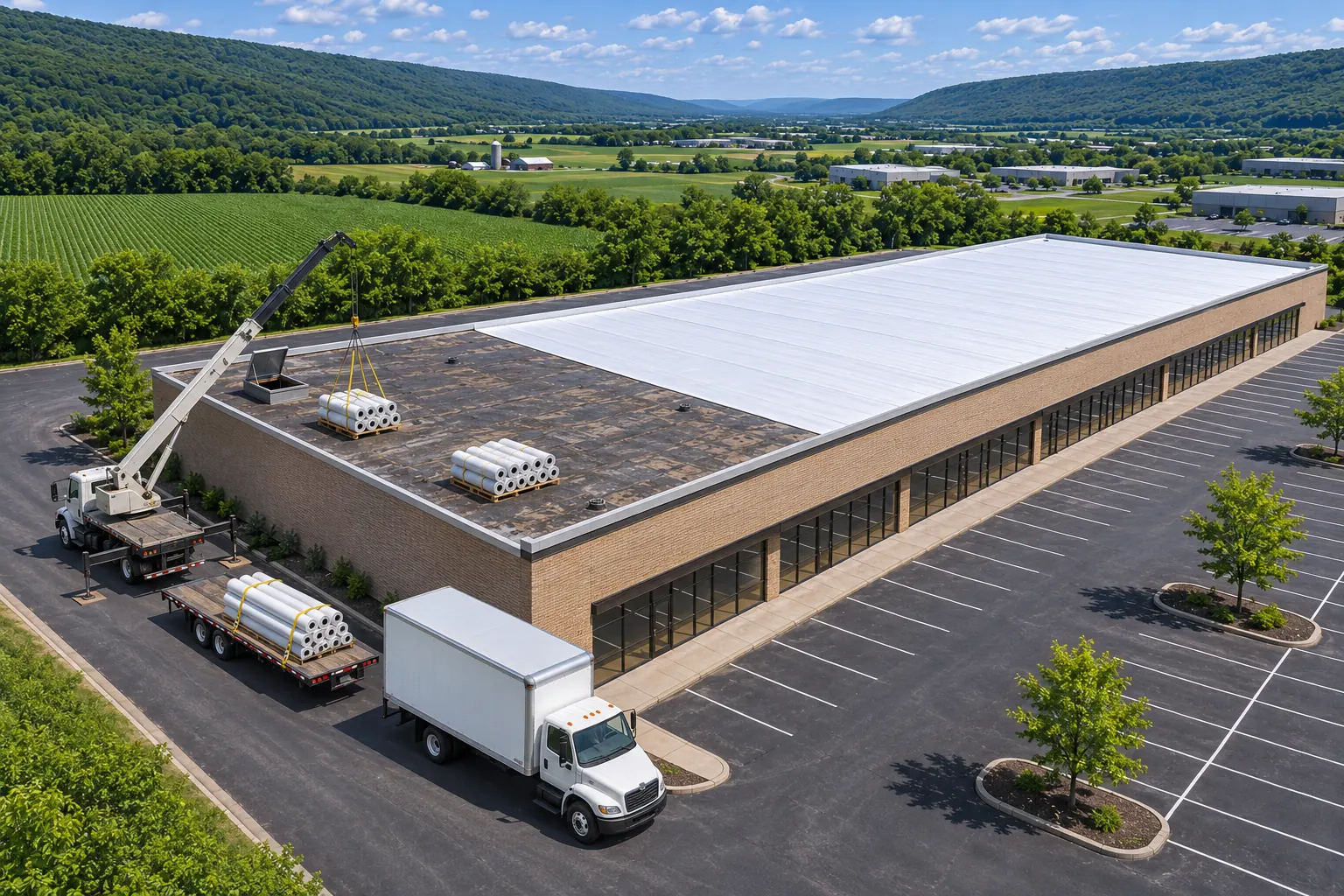
Seams, curbs, drains, edge metal, and every stain below get photographed and marked on one roof sketch.
Cores and a moisture meter show how many roofs are stacked up on the deck and how far water has spread through the insulation board.
The proposal names the membrane or panel, insulation, attachment, and flashing details for your deck and slope.
Crews open only what they can close that day, working outward from drains so water always has a way off.
Curbs, pipe boots, drains, coping, and edge metal get flashed to the new roof before any section counts as finished, and walkway pads go down on service routes.
A final walk of the roof with you, then photos of each detail and a layer list you can keep with the building file.
Replacement comes up when cores find wet insulation across large areas, when the membrane has been patched so often that seams fail between visits, or when the deck under it has rusted or rotted. One leak on a newer roof calls for a repair visit.
How the roof is used and which rooms under it can never get wet. We ask about lab equipment, server rooms, rooftop access, and past leak records, then plan sequencing and protection around them before choosing materials.
One building at a time. Each roof gets its own walk, cores, and drainage notes, even when the buildings look alike. Staging and material deliveries can be shared across the park, while each scope stays specific to its roof.
It can. Condensation inside an old brick building can wet the roof assembly from below. We compare where the moisture shows up against roof leaks and how the building runs, and plan insulation and vapor control with that in mind.
Roof size, layers to remove, deck repairs, and weather set the length. A small retail roof can go quickly, while a plant roof with many curbs takes longer. The proposal lists the planned sequence so you can plan tenants and deliveries around it.
Yes. Many properties around State College pair a flat office or retail roof with a pitched shop, barn, or storage building. Each roof gets the system that fits it, and the walls where they meet get flashing details that tie the two together.
You receive a roof sketch with seams and penetrations marked, a list of the layers removed and installed, and photos of the flashing details. Keep them with the building file for the next contractor or buyer.
Equipment near the end of its life is best swapped before or during the reroof. New units can then sit on curbs built for them, and nobody has to cut into the finished membrane a year later.
Call or send the address, and we will walk the roof and match it to the right system.