Farm Owner
- A system matched to the building's real use
- Deck repairs done while the roof is open
- Drainage that keeps water off doorways

We take on Lewistown commercial roofing for farm businesses, choosing low-slope systems around the deck, drainage, and moisture inside each building.
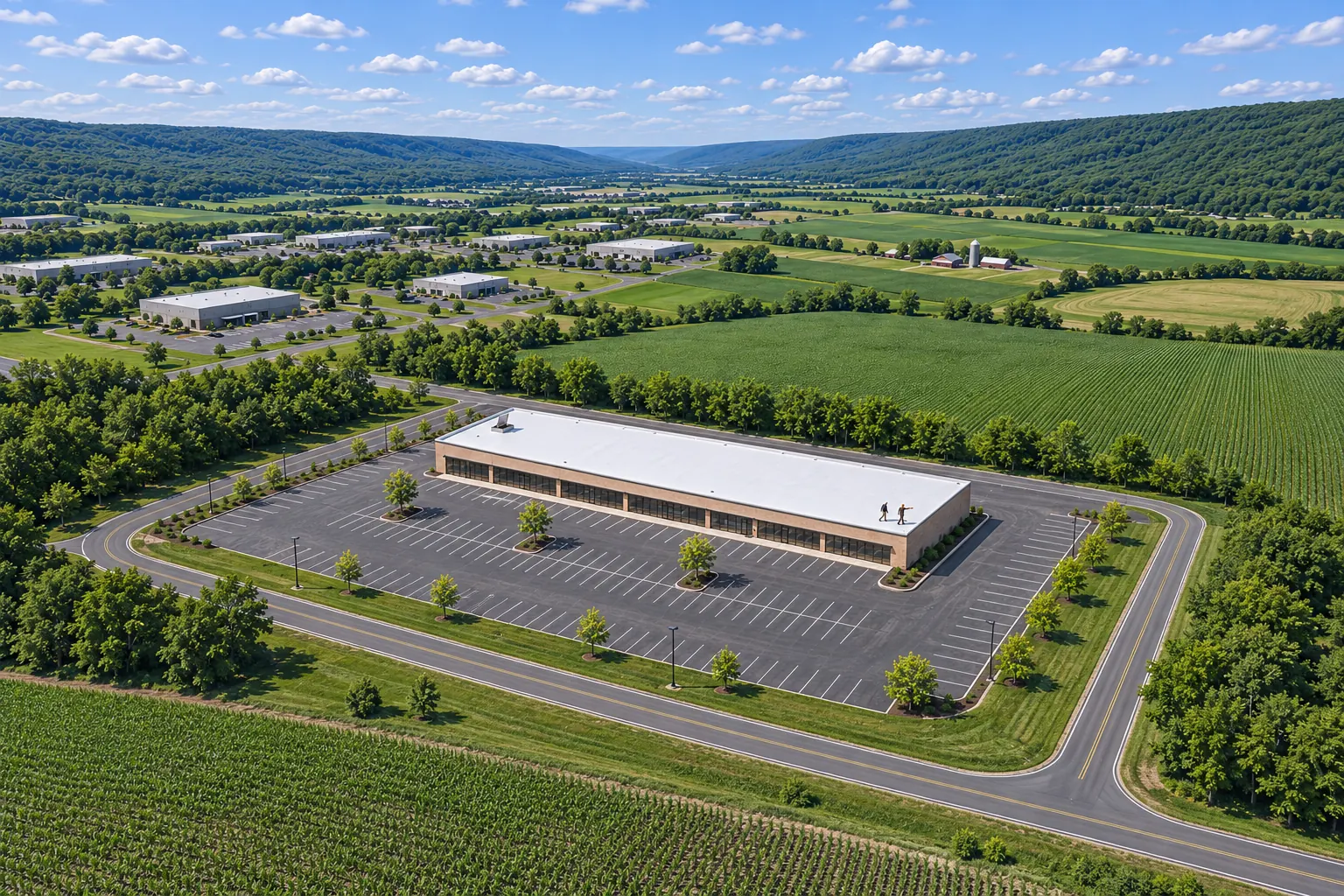
Lewistown commercial roofing on farm business buildings starts below the roof, with the deck, the drainage, and the air inside.
Animals, wash-down areas, and stored produce put moisture into the air, and that moisture reaches the roof deck from below. A membrane picked without that in mind ends up over wet insulation.
We check the deck, map drainage, and look at ventilation and equipment openings before naming a system.
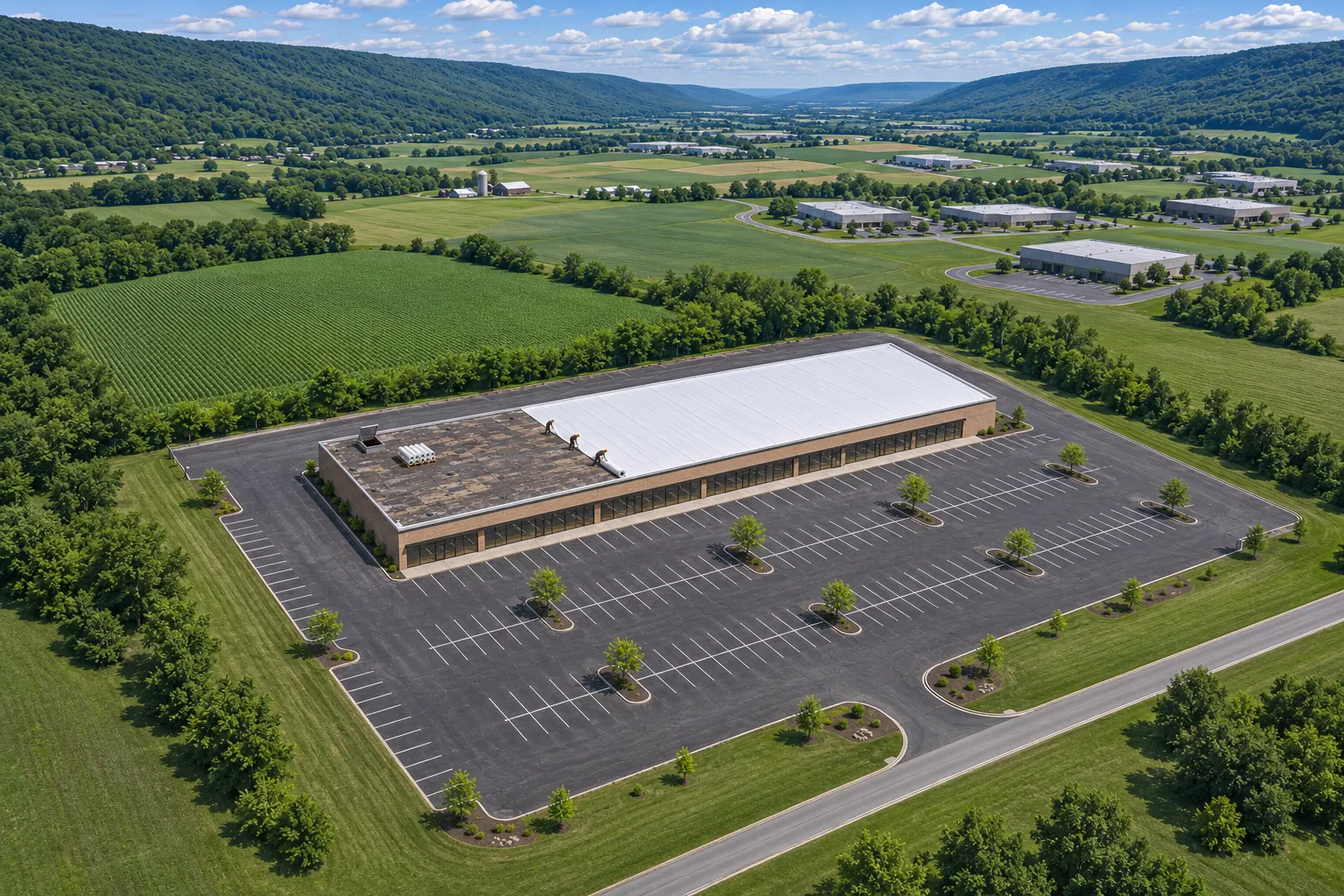
Farm roofs show trouble in the stalls, the feed room, and the equipment bays.
Wet bedding without rain points to condensation dripping from the underside of the roof.
Humid air from animals reaches a cold deck and drips back down where no vapor retarder exists.
Rust dust on stored feed or equipment means the deck underside is corroding.
Moist air and old leaks rust steel decks from below, and soft spots show up under foot.
Water running in at overhead doors after storms can start at a low roof section above.
Sagging or poorly sloped sections hold water that finds the weakest seam.
Leaks right under exhaust fans trace to the fan curbs and the flashing around them.
Vibration from big ventilation fans loosens curb flashing faster than on office roofs.
A sheet of water off one corner in heavy rain means the gutters or slope send everything to one spot.
Long farm roofs collect a lot of water, and small gutters overflow at the low end onto doors and lanes.
A farm business roof reaches the owner, the people working below, and the stock.
These systems cover most farm business and commercial roofs around Lewistown.
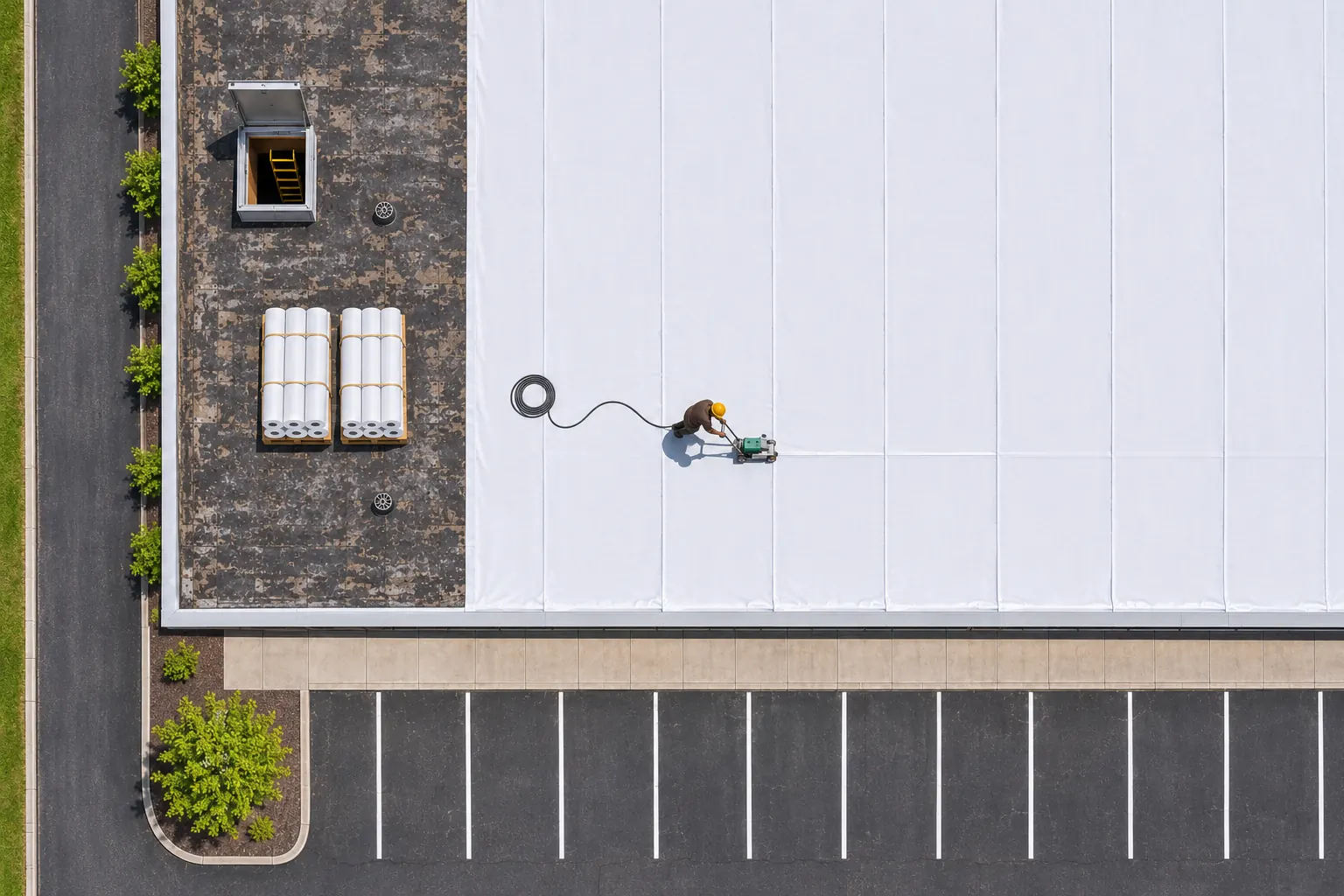
Welded TPO fits low-slope farm offices, shops, and processing rooms when insulation and vapor control get planned underneath.
TPO Roofing details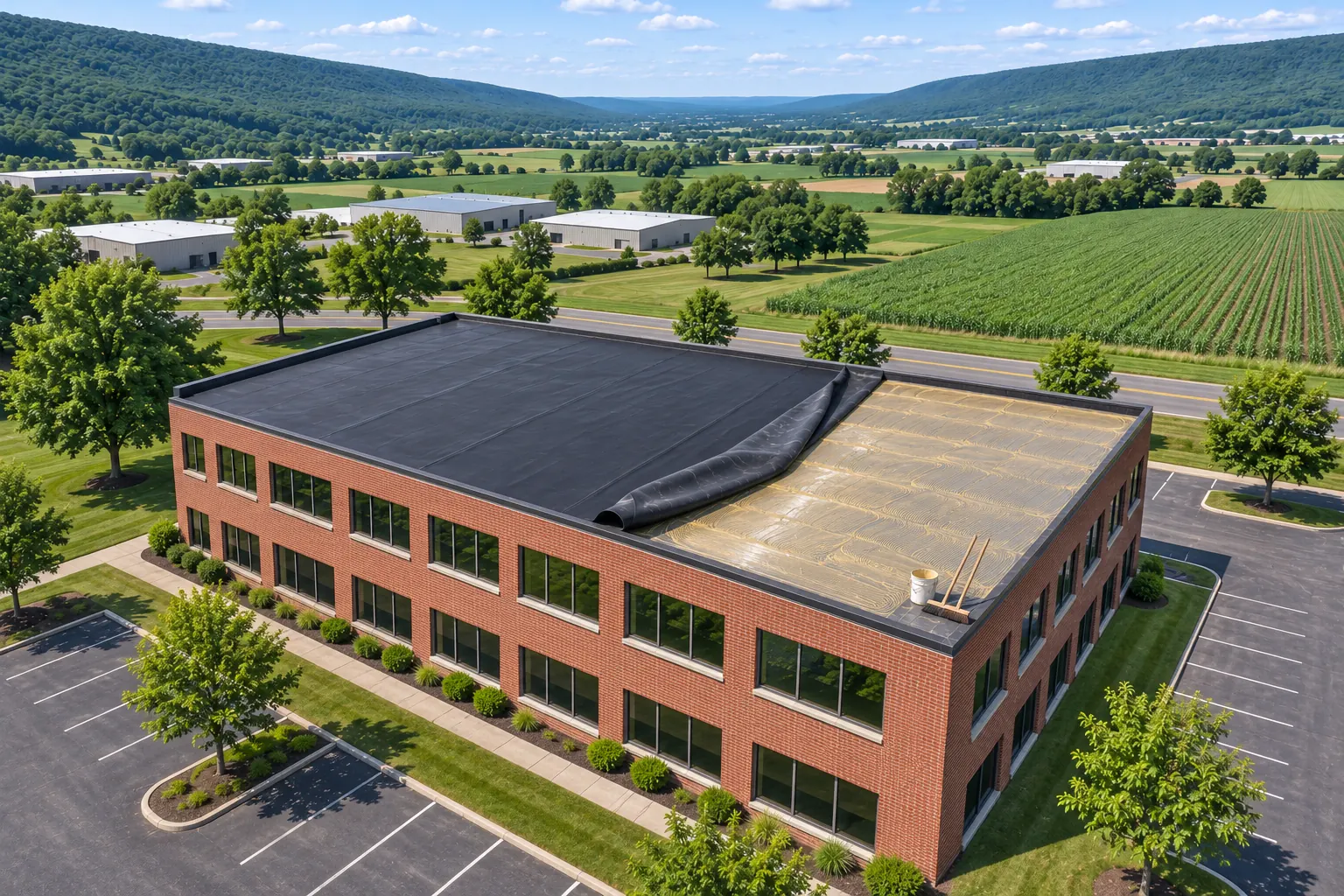
EPDM covers plain low-slope sections on barns and storage buildings with few seams to watch.
EPDM Roofing details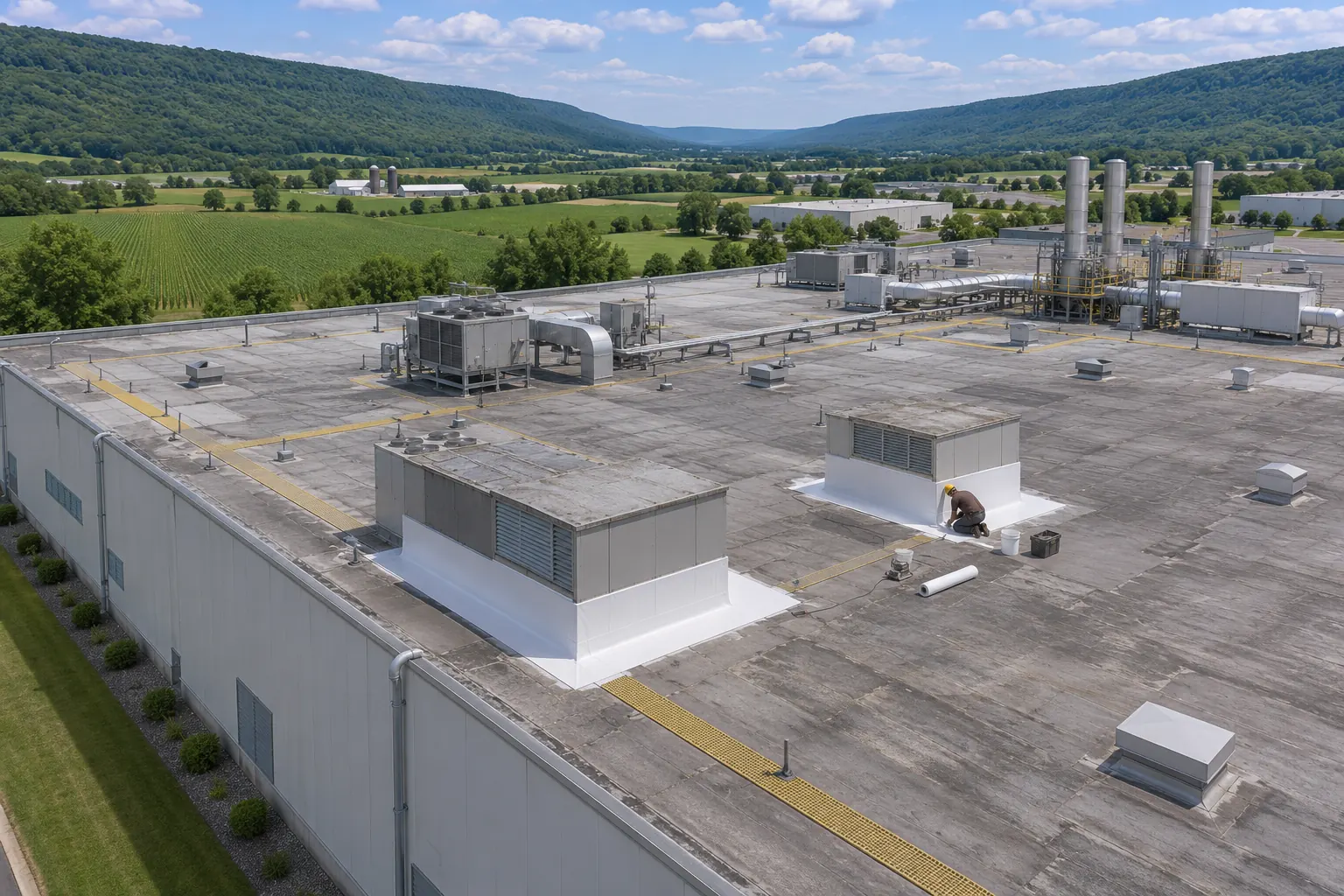
Processing and packing buildings need roof work planned around wash-down rooms, fans, and equipment.
Industrial Roofing details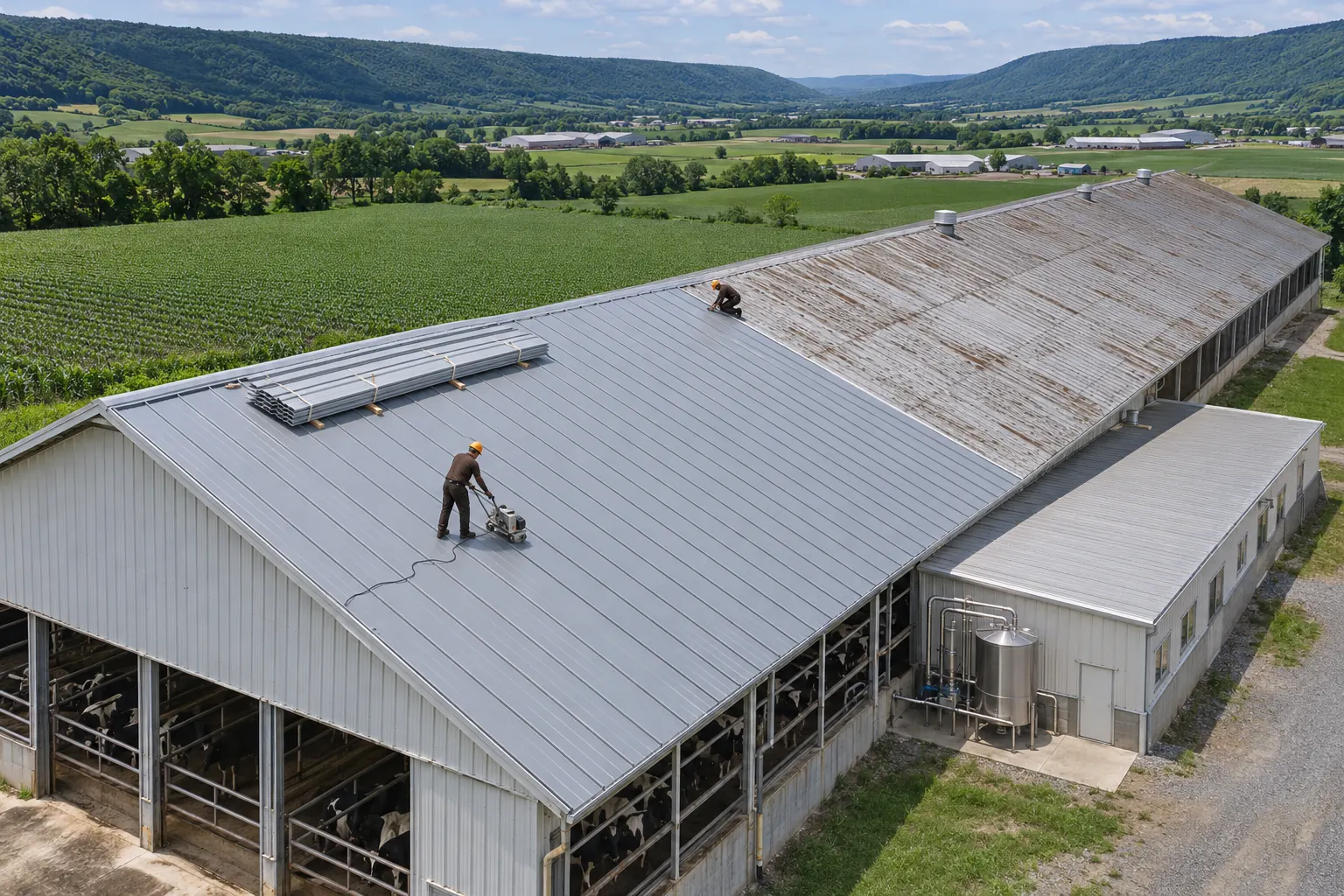
Standing-seam steel replaces rusted panels on barns and equipment buildings, with condensation control built in.
Commercial Metal Roofing detailsThat is often condensation. Send the address and tell us what the building houses, and we will check both sides of the roof.
Farm business roofs follow this order before any membrane is chosen.
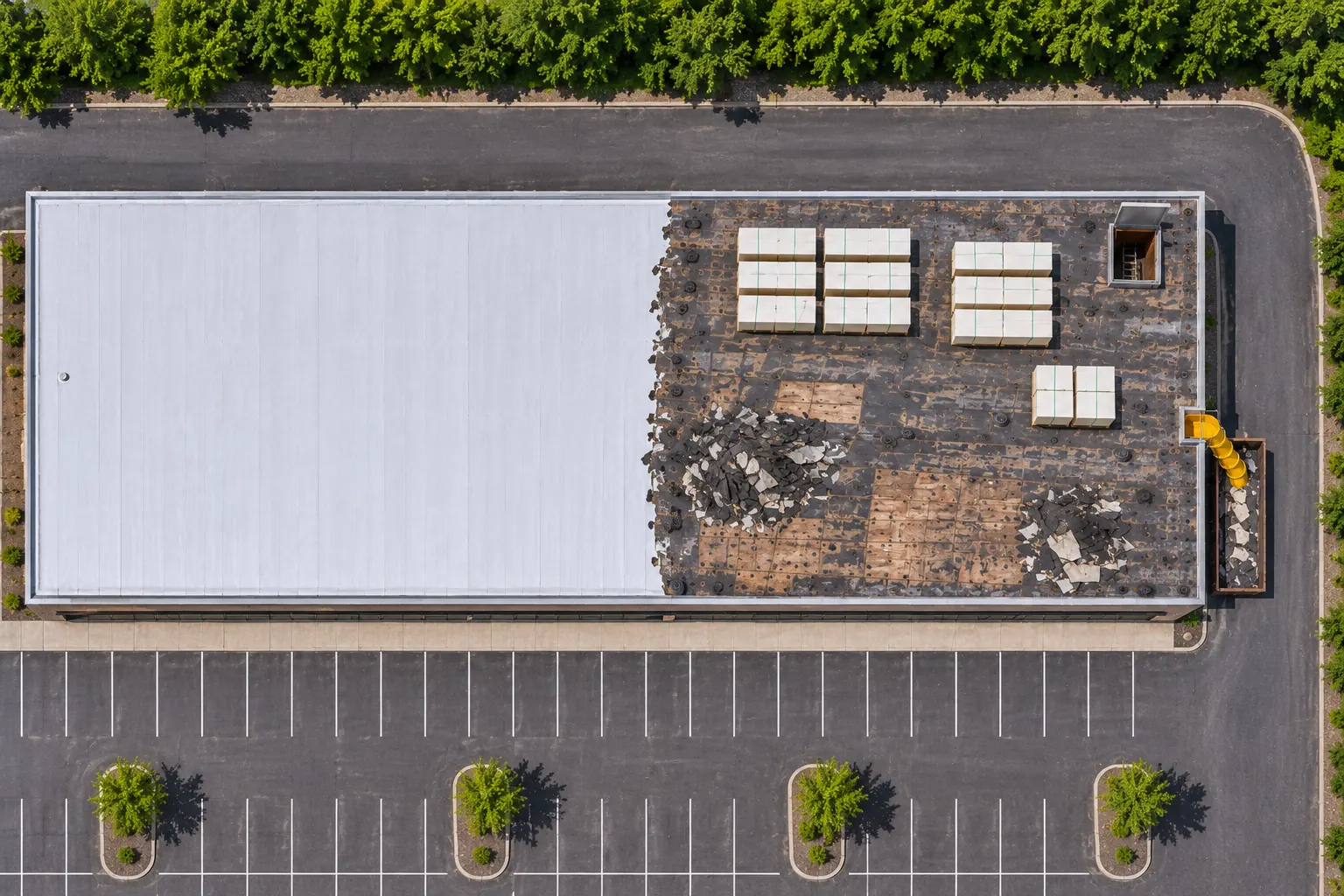
We check the air, ventilation, and stored goods inside, and note where drips and rust show up.
Cores and a walk underneath show deck rust, wet board, and every fan or vent opening.
Low spots, gutters, and door areas get mapped so the new slope moves water away.
The scope pairs a membrane or metal roof with the insulation and vapor control the building needs.
Crews install section by section, then we leave a short checklist for seasonal roof checks.
From Lewistown our commercial roofing work also reaches these towns.
Farm or shop outside Lewistown? Call us or send us a message with the address.
Start with the deck, the drainage, and the moisture inside the building. We also look at equipment openings and how the roof will be maintained. A good membrane over the wrong assembly still ends up wet.
Farm offices, shops, barns, processing rooms, and small commercial buildings. Low-slope sections take TPO or EPDM, and sloped barns and sheds take standing-seam metal.
We roof barn additions around Lewistown. Additions often meet an older roof at a wall or valley, so the tie-in between old and new gets its own detail in the scope.
Processing and packing rooms are part of our work around Lewistown. Wash-down areas and fans add moisture, so insulation and vapor control get planned with the roof.
Often, yes. Sections open over empty areas first, and each one gets closed before the crew leaves. We plan the order with you around feeding and cleaning times.
Sections, in most cases. We open the roof over empty or easily covered areas first, close each part before the crew leaves, and work around feeding, milking, or equipment schedules. Large single openings are avoided because weather in the valley can change fast.
Wash-down and processing rooms push a lot of moisture into the roof assembly. We plan insulation, a vapor retarder, and fan curbs around that moisture, and pick flashing materials that hold up near cleaning chemicals.
Permit rules depend on the building's use and the municipality. Pennsylvania's Uniform Construction Code exempts some agricultural buildings, while farm stores, offices, and processing rooms open to the public are usually covered. We describe the scope so you can confirm with the township or its code agency.
Send the address and the building use, and we will walk the roof.