
State College Commercial Roofing FAQ
Straight Answers on Roof Systems, Weather, and Planning
This State College commercial roofing FAQ answers 30 questions owners ask about roof systems, weather, pricing, and nearby towns.
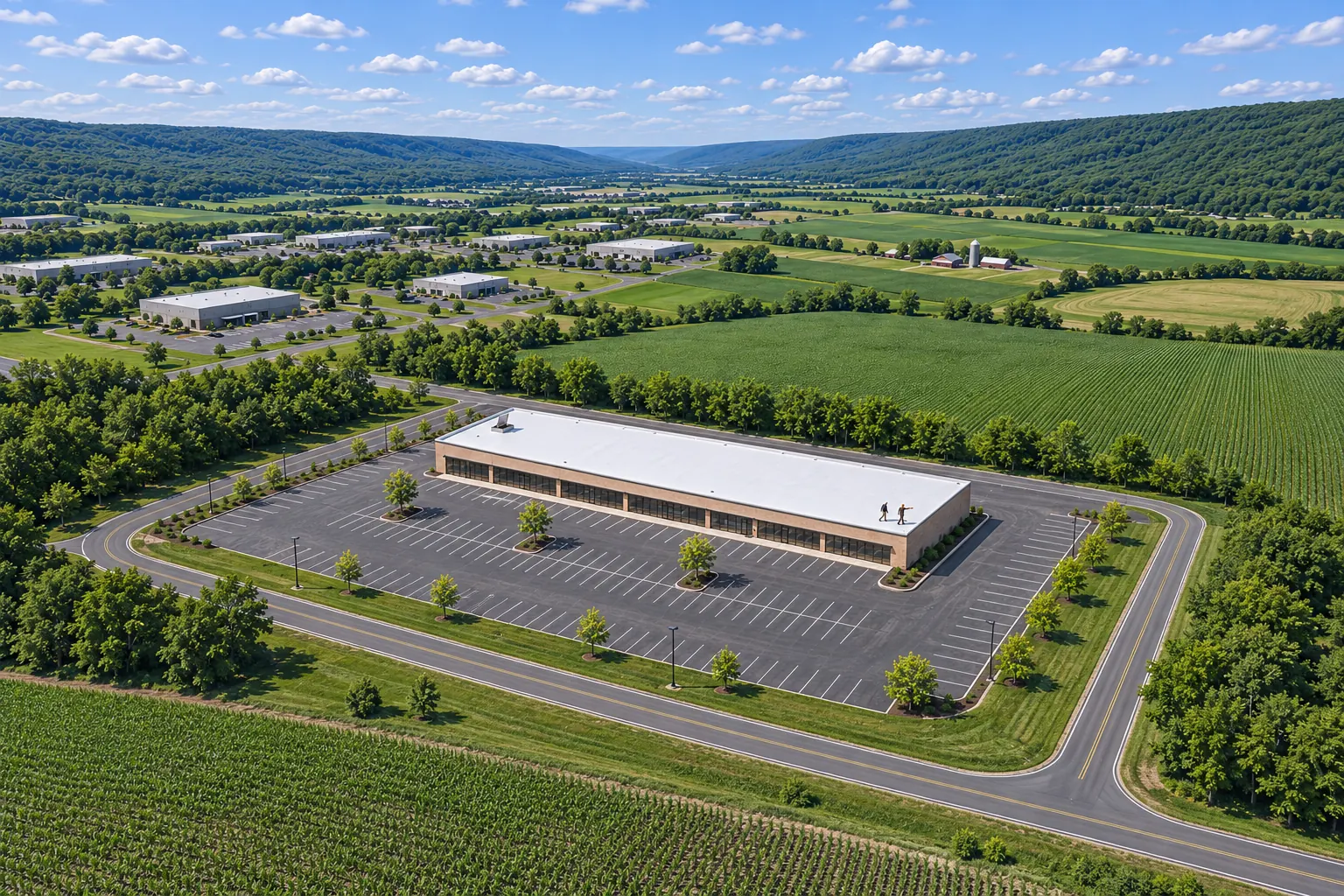
Our State College commercial roofing FAQ groups the questions owners and facility managers ask most, by topic. Jump to a topic below.
State College Commercial Roofing FAQ: Planning and Membranes
Hiring, TPO, and EPDM questions come first.
Hiring and planning
- What should a State College commercial roofing contractor learn about a research office before proposing work?
A roofing contractor should learn how the research office uses its roof and which interior operations need protection. We review equipment access, sensitive areas and existing leak records alongside the roof inspection. For a State College project, those details help turn a material proposal into a practical construction scope with workable access and sequencing.
- Does commercial roofing include farm buildings and retail centers?
Commercial roofing here includes business-use farm buildings and retail centers, with the actual assembly and use guiding the work. We inspect drainage, supports, coverings and equipment before recommending a system. These buildings can have very different needs, so the commercial label should not be treated as a reason to specify the same roof construction everywhere.
- Can winter replacement work around research equipment that must stay operating?
Winter roof replacement can work around operating research equipment if access, protection and product installation conditions can be maintained. We coordinate the sequence with facility staff and plan weather protection for opened sections. Surface moisture and temperature can still stop roofing during an agreed operating window, so equipment availability alone never sets the work dates.
- How can nearby commercial roofers assess several buildings in one office park?
Several office park buildings should be assessed individually before their roofing work is grouped together. We document each assembly, drainage layout and equipment arrangement, then identify opportunities for coordinated staging.
Similar appearances do not establish equal roof condition, so a shared project plan still needs building-specific findings and scopes rather than one recommendation copied across the property.
TPO roofing
- What does TPO mean for a retail center's roof construction?
TPO identifies a thermoplastic single-ply membrane used within the retail center's roof assembly. We pair the sheet and welded seams with matching insulation, attachment and flashing details. The material name leaves drainage and equipment connections open, so the specification should explain how those parts work together on the actual building.
- How is TPO roofing priced for a research office with crowded roof equipment?
A roof inspection sets the TPO price for the research office by establishing the complete work scope. We assess area, system and thickness, insulation, tear-off layers, deck repairs, edge metal, flashing, rooftop equipment, access, staging and season.
Crowded equipment can complicate transitions and installation, which is why roof area alone falls short of describing the project.
- Can a retail center retain its old roof beneath new TPO?
A retail center may retain an existing roof beneath TPO only where investigation and the proposed assembly support that approach. We assess moisture, attachment and underlying layers before recommending retention. Drain connections, curb heights and perimeter details also need to suit the new construction, rather than simply placing another sheet over the old surface.
- What limits TPO installation during cold weather at an office park?
Cold-weather TPO installation is limited by the system's material-handling, attachment and welding requirements, together with safe access and surface conditions. We plan work around those requirements instead of applying one temperature rule to every component. Moisture or unsuitable conditions may postpone a detail even when other roof work can proceed within the day's plan.
EPDM roofing
- Why is EPDM called rubber roofing on commercial buildings?
EPDM is a synthetic rubber membrane used as a sheet covering in commercial roof assemblies. We install it with appropriate attachment, seam construction and flashing for the building. Calling the roof rubber describes the membrane material, but owners still need to consider the insulation, drainage and connections that determine how the complete assembly performs.
- What affects EPDM replacement cost across adjoining retail units?
EPDM replacement cost across adjoining retail units depends on the shared roof and each section's detailing.
Our roof inspection sets the project price after reviewing size, system thickness, insulation, tear-off layers, deck repairs, edge metal, flashing, equipment, access, staging and season. We identify shared drains and tenant equipment so their work is represented in the scope.
- Can an average EPDM life figure tell us when to reroof a research building?
An average EPDM life figure is no basis for setting the replacement date for a particular research building. We inspect membrane condition, seams, flashing and moisture beneath the surface alongside the maintenance record.
Those findings show whether continued upkeep, localized work or replacement is justified, without assuming that every roof of the same age has deteriorated equally.
- How can freeze-thaw cycles affect an EPDM roof's vulnerable details?
Freeze-thaw cycles can expose weaknesses where moisture remains around EPDM seams, drains or flashing. We inspect those details and the underlying assembly rather than assume the membrane material alone explains the problem. Effective work needs to address drainage and the actual failed connection, because a flexible sheet still leaves vulnerable points in the installed roof.
Have a Question About Your Own Roof?
Call with what the roof is doing, and we will answer it for your building.
Industrial, Metal, Cost, and Nearby Town Questions
Plant roofs, metal roofs, building conditions, and the towns around State College.
Industrial roofing
- What does industrial roofing involve at a research support facility?
Industrial roofing at a research support facility involves the roof assembly and its relationship with equipment, access and sensitive operations. We assess drainage and materials alongside the restrictions on opening or working above occupied areas. The scope should describe those practical needs, since industrial roofing refers to no single universal covering or installation method.
- Why does industrial roof cost depend on the work beneath the covering?
Industrial roof cost depends on underlying work because insulation and deck condition can change the replacement scope substantially.
A roof inspection sets the price after we evaluate area, system thickness, insulation, removal layers, deck repairs, edge metal, flashing, equipment, access, staging and season. The proposal should identify concealed uncertainties rather than price only the visible covering.
- How can a manufacturing roof accommodate future changes to production equipment?
A manufacturing roof can accommodate known future equipment changes by coordinating support, curb and access details during planning. We need sufficiently developed equipment information before incorporating those features. Guessing at future penetrations can create unnecessary weak points, so uncertain changes should be documented rather than built into the roof without a workable design.
- Where should industrial walkway pads go on a heavily serviced roof?
Industrial walkway pads belong along planned service routes and around appropriate work points, using details compatible with the roof system. We review how crews actually reach equipment before setting the layout. Pads should keep drainage paths open, and unprotected areas can still be damaged, so maintenance procedures still need to protect the whole roof assembly.
Commercial metal roofing
- How does retrofit work affect a commercial metal roof's price per square foot?
Retrofit work changes the assembly and installation scope behind a commercial metal roof price. We set a building-specific price through inspection of roof size, system and thickness, insulation, tear-off layers, deck repairs, edge metal, flashing, equipment, access, staging and season. Required support changes must be understood before any area-based comparison can describe the actual project.
- What shortens metal roof life on a commercial farm building?
Corrosion, failing fasteners and unresolved moisture can shorten metal roof service on a commercial farm building. We inspect the environment inside as well as panel and flashing conditions above.
Continued performance depends on those findings and maintenance, so a service-life discussion should address the actual roof rather than promise a standard duration for all metal panels.
- Does panel thickness alone establish a commercial metal roof's snow capacity?
Panel thickness alone is no proof of snow capacity because the supporting structure and connections also carry the load. We identify where structural evaluation is needed before selecting a metal assembly.
An existing commercial building's condition and proposed construction must be considered together, rather than treating one panel specification as proof that the whole roof can support snow.
- What does retrofit framing do beneath a new commercial metal roof?
Retrofit framing supports the proposed metal roof arrangement and connects its loads to adequate building support. We review the existing structure, intended slope and connection details before recommending the system.
The framing plan also affects drainage and edges, so it must be developed with the whole roof rather than treated as an accessory added after panel selection.
Cost and building conditions
- How should a State College owner compare whole-roof replacement prices?
A State College owner should compare scopes alongside prices, including the materials retained and removed. Our roof inspection sets the specific building price using roof area, system thickness, insulation, tear-off layers, deck repair, edge metal, flashing, equipment, access, staging and season.
A proposal that omits necessary underlying work is not describing the same project as one that includes it.
- Could heavy wet snow and iced gutters alter a commercial reroof plan?
Heavy wet snow and iced gutters can reveal drainage and support concerns that should inform a commercial reroof plan. We review observed problems and identify where a structural assessment is needed.
Meltwater routes also need attention, especially at roof transitions, so the new covering is not installed over an unresolved pattern of water backing up against vulnerable details.
- Does summer wind or hail automatically justify replacing a retail roof?
Summer wind or hail does not automatically justify replacing an entire retail roof. We inspect damage extent and the condition of the remaining assembly before recommending repairs or replacement. Insurance coverage depends on the policy and cause of damage, while the roofing scope should explain the physical findings that support the proposed work.
- Can indoor humidity affect reroofing decisions for an older brick research office?
Indoor humidity can affect reroofing decisions when condensation involves the existing assembly of an older brick research office. We compare moisture patterns with roof leaks and building operation before proposing insulation or other changes.
The new covering should be part of a considered moisture plan, rather than assumed to resolve dampness whose source is inside the building.
- Where should reroofing requirements be confirmed for a State College research office?
Reroofing requirements should be confirmed with the authority reviewing the State College research office and its proposed scope. Pennsylvania’s statewide construction framework is the Uniform Construction Code. We describe retained roof layers, planned removal and equipment changes so the inquiry addresses the actual assembly and work rather than only the name of the replacement membrane.
Nearby commercial buildings
- Can a St. Marys retail roof replacement be divided by tenant opening hours?
A St. Marys retail roof replacement can accommodate tenant hours where work zones and access can be separated appropriately. We review shared drainage and daily weather protection before dividing the sequence. Tenant boundaries do not always match suitable roof stopping points, so the plan must protect the assembly as well as maintain practical building access.
- What should a Lewistown farm business consider before choosing a low-slope roof system?
A Lewistown farm business should consider the deck, drainage and indoor moisture conditions before choosing a low-slope system. We also review equipment openings and how the roof will be maintained.
Selecting a membrane without resolving those conditions can leave the business with a suitable material installed in an assembly that does not match its actual use.
- How can a Bellefonte office keep roof penetrations organized during an equipment upgrade?
A Bellefonte office can keep penetrations organized by coordinating the equipment layout and roof details before installation. We identify openings to retain, remove or add, then plan proper flashing and service access. Completing that layout early helps avoid unnecessary cuts through new roofing or clusters of penetrations too crowded to maintain properly.
- Does a Clearfield commercial owner need roof records before selecting replacement materials?
Roof records help a Clearfield commercial owner select replacement materials by identifying the existing assembly and previous work. We compare those records with current inspection findings because buildings can change after the original installation.
Missing records do not settle the material choice; they increase the importance of investigating layers, attachment and moisture before the scope is developed.
- Can a Punxsutawney retail landlord coordinate reroofing with planned tenant improvements?
A Punxsutawney retail landlord can coordinate reroofing with tenant improvements when the equipment and access plans are known early. We review proposed roof openings and staging so one project does not damage the other's work.
The parties should check their lease responsibilities while agreeing on the scope, especially where tenant equipment changes affect the shared roof.
Ask What This State College Commercial Roofing FAQ Leaves Out
Call us or request an estimate, and we will answer for your building.