If Your Roof
Is an Old Rubber Roof Pulling at the Walls
Shrinking sheets bridge the corner where roof meets parapet, then tear when the wall moves.
Start WithEPDM Replacement

As a State College EPDM roofing contractor, we replace worn rubber roofs on brick offices, retail rows, and older flat buildings, seams and drains included.
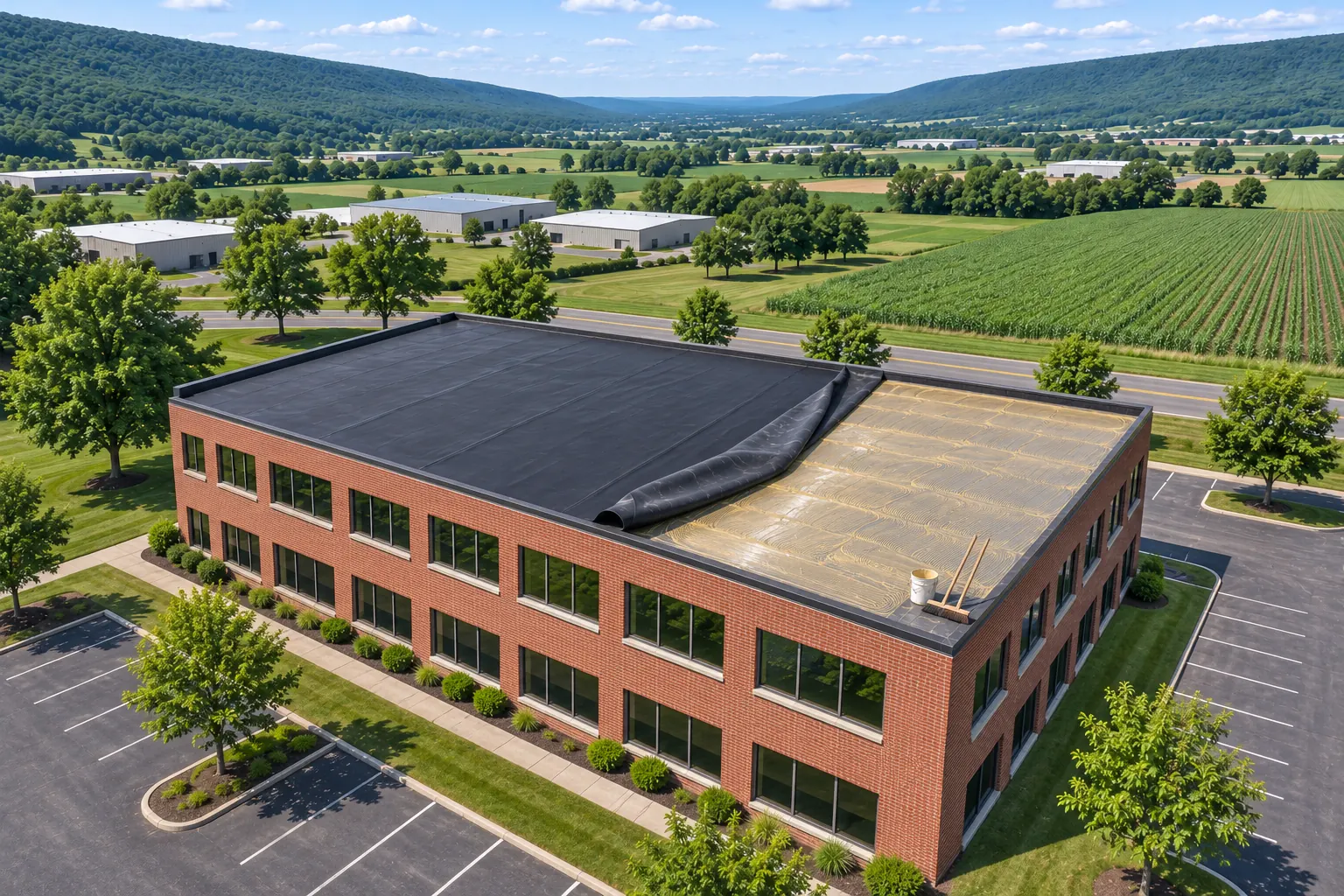
State College EPDM roofing fits large flat fields and older brick buildings. These roofs show where it fits and where to start elsewhere.
Shrinking sheets bridge the corner where roof meets parapet, then tear when the wall moves.
Wide sheets cover plain roofs with few seams, which keeps the number of joints low.
Shared drains and tenant equipment get scoped unit by unit inside one replacement.
Crowded equipment roofs flash faster and stay tighter with welded TPO details.
Rubber roofs age in a few predictable places. Here is how each one shows up inside.
Damp drywall along outside walls often means the membrane has shrunk away from the parapet.
Rubber that tightens with age pulls off the wall, leaving a stretched sheet over an open corner.
Leaks that show up as snow melts usually start at seams sitting in standing water.
Old splice adhesive dries out, and lap edges open where water sits against them all winter.
Loose mortar near the top of brick walls lets water into the wall above the roof line.
Coping joints and loose bars at the wall top let water run behind the flashing.
Gurgling or backed-up interior drains can mean the roof drain bowl has shifted under the rubber.
Clamping rings that loosen or crack let water slip between the membrane and the bowl.
Small new drips after hail or a dropped tool point to punctures in the field.
Brittle, crazed rubber cracks under foot traffic, and punctures multiply near service paths.
Rubber roofs go on in three main ways, plus a recover option when the old roof checks out.
Rubber glued to cover board suits office roofs that need a smooth surface and good wind resistance.
Plates and fasteners hold the sheet to the deck, a lighter build-up for plain steel decks.
Stone ballast holds the sheet on decks rated for the weight, with few penetrations to work around.
New board and rubber over one old roof, used only when cores find dry insulation throughout.
A new rubber roof reaches past the owner to the people inside.
That gap at the parapet lets meltwater straight in. Send the address and we will check the edges and seams.
Here is the order a rubber roof replacement follows.
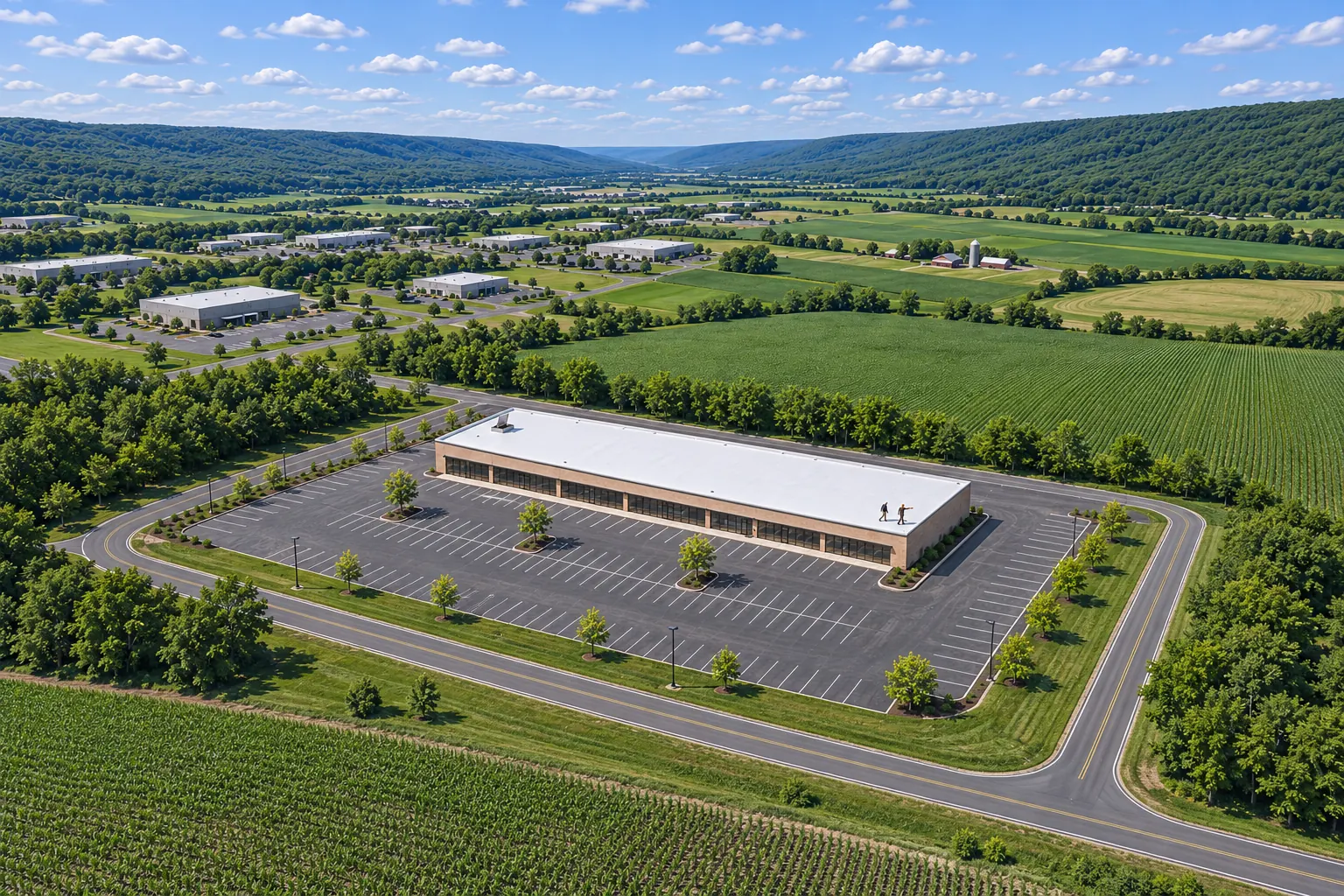
We walk every parapet, probe seams, open a drain ring, and core the field where water sits.
Adhered, fastened, or ballasted gets picked from the deck, the wind exposure, and the building use below.
Old rubber and wet board come off in sections, and soft or rusted deck panels get replaced.
Large sheets roll out over new board, laps get primed and taped, and edges get terminated at the walls.
Parapets get new flashing and coping, and every drain gets a fresh clamping ring before the final walk.
A rubber roof often sits beside a different system on the same lot.
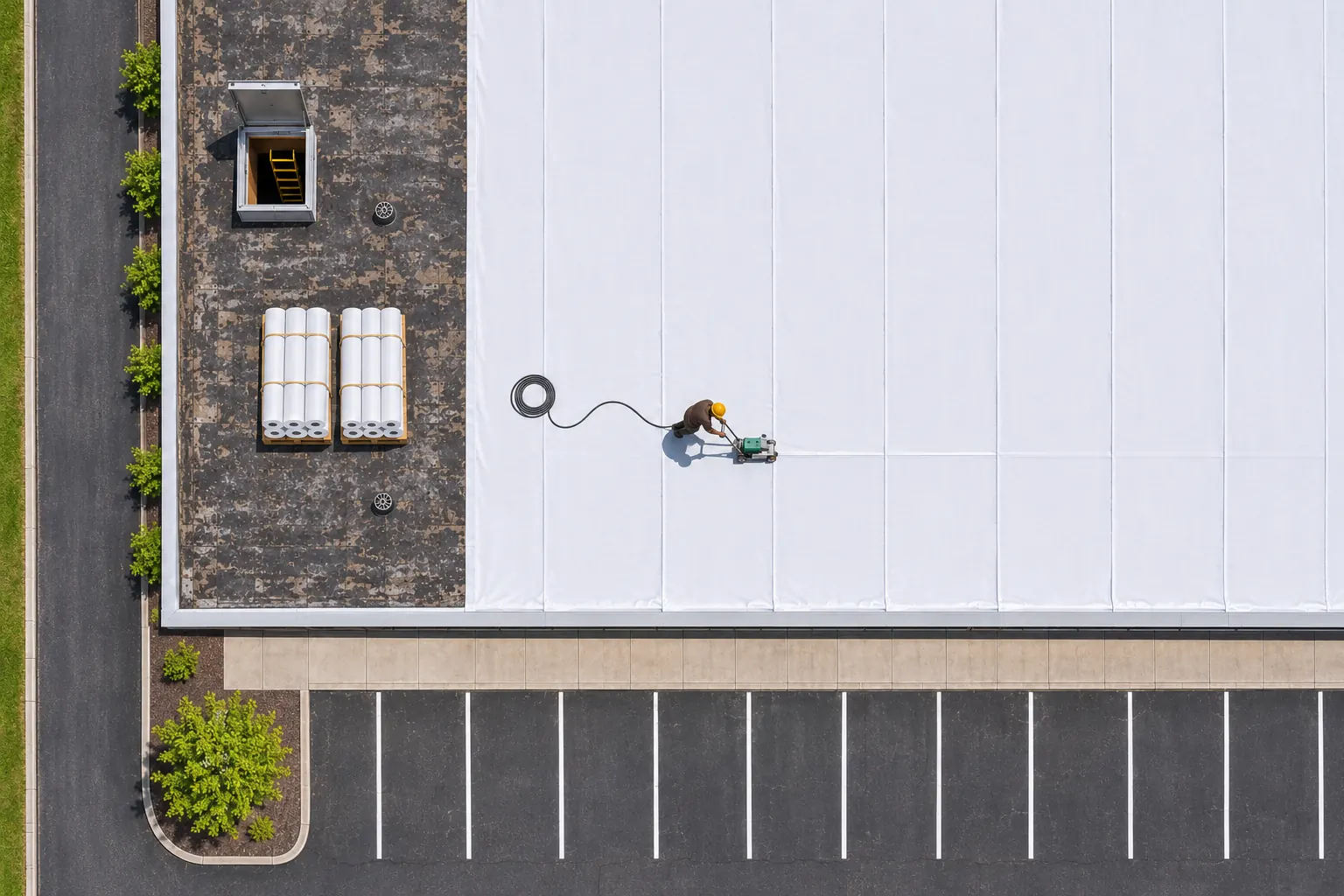
Equipment-heavy roofs and cooled stores often switch to welded white TPO when the rubber comes off.
TPO Roofing details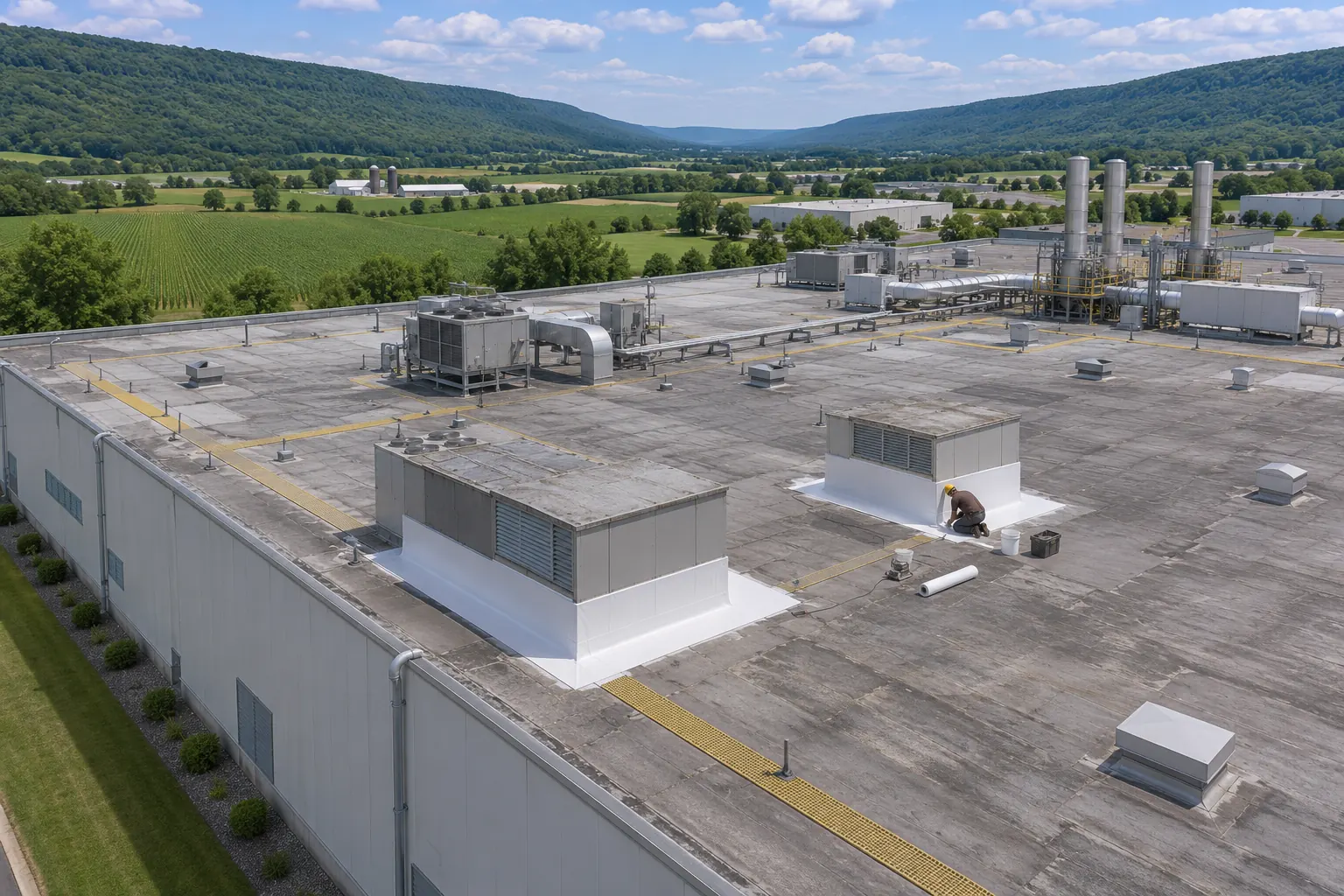
Production buildings behind an office need flashing sized for heat and vibration around stacks.
Industrial Roofing details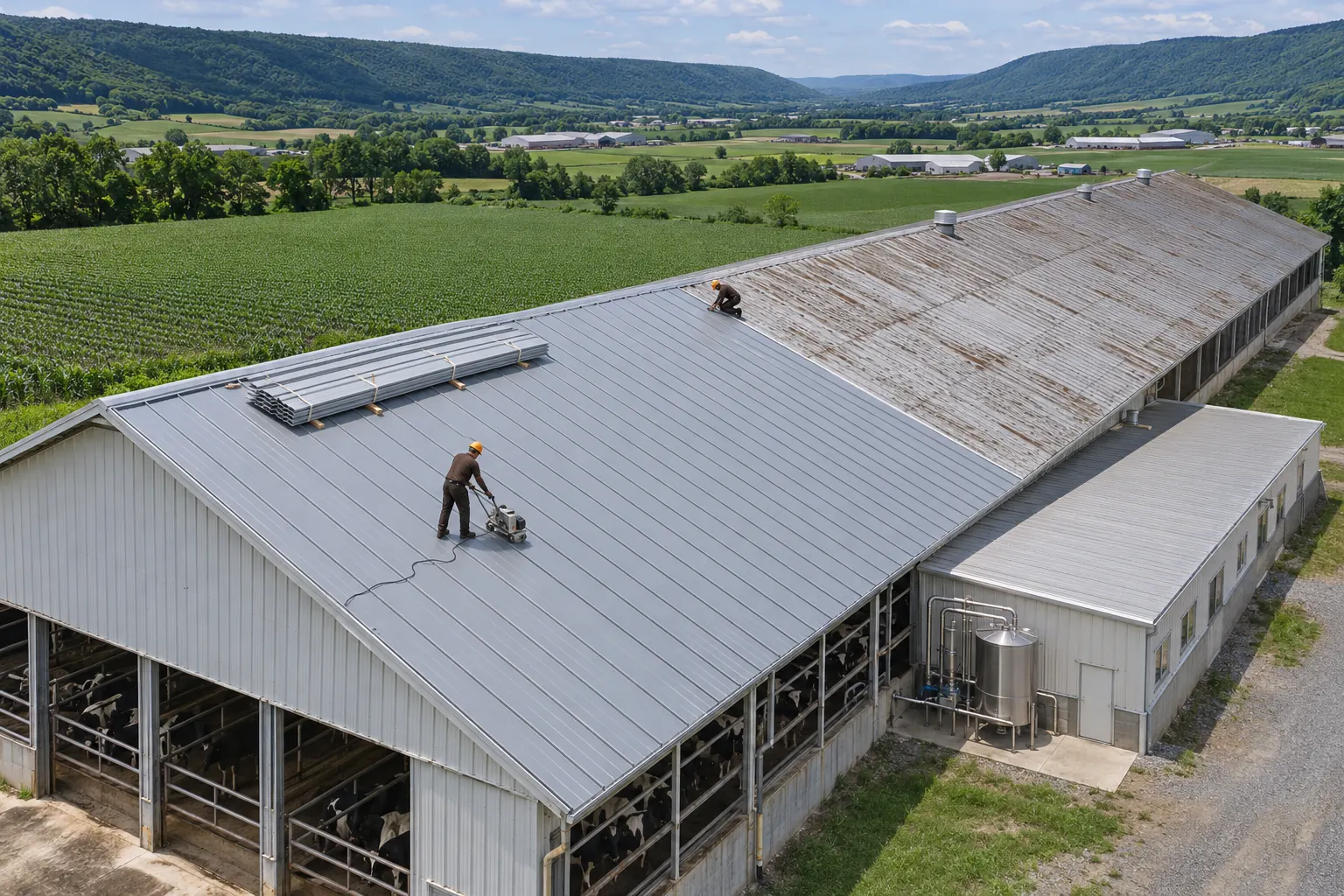
Barns and equipment sheds near a brick office get standing-seam steel with snow guards.
Commercial Metal Roofing detailsEPDM is a synthetic rubber sheet used as the top layer of many flat commercial roofs, which is why it gets called a rubber roof. The sheet only works with the insulation, drainage, and edge connections around it, so we scope all of those together.
The shared roof and each unit's details. The roof walk sets the price from area, sheet thickness, insulation, tear-off layers, deck repairs, edge metal, flashing, equipment, access, staging, and season. Shared drains and tenant units get listed so nobody pays for work twice.
An average figure says little about your roof. We check the membrane, seams, flashing, and moisture under the surface, then read the maintenance record. Those findings decide whether upkeep, a section, or full replacement makes sense for that building.
Freeze-thaw cycles work on any spot where water lingers, such as seams, drain rings, and wall flashing. Ice opens small gaps a little more each winter. The fix targets drainage and the failed connection itself.
Only over one dry roof. Cores across the field decide it. Wet board or two existing roofs mean a full tear-off, because trapped water rusts the deck and soaks new insulation.
It depends on the building below. Cooled offices and stores often switch to white TPO, while unheated storage and buildings with heat loss concerns can stay with black EPDM. We talk through how each space gets used.
Perimeter edges, inside corners at parapets, and seams sitting in ponded water usually fail before the open field. Drain clamping rings and pipe boots follow. Those spots get checked closely on every roof walk and rebuilt in a replacement.
Send the address, and we will check the seams, walls, and drains.